
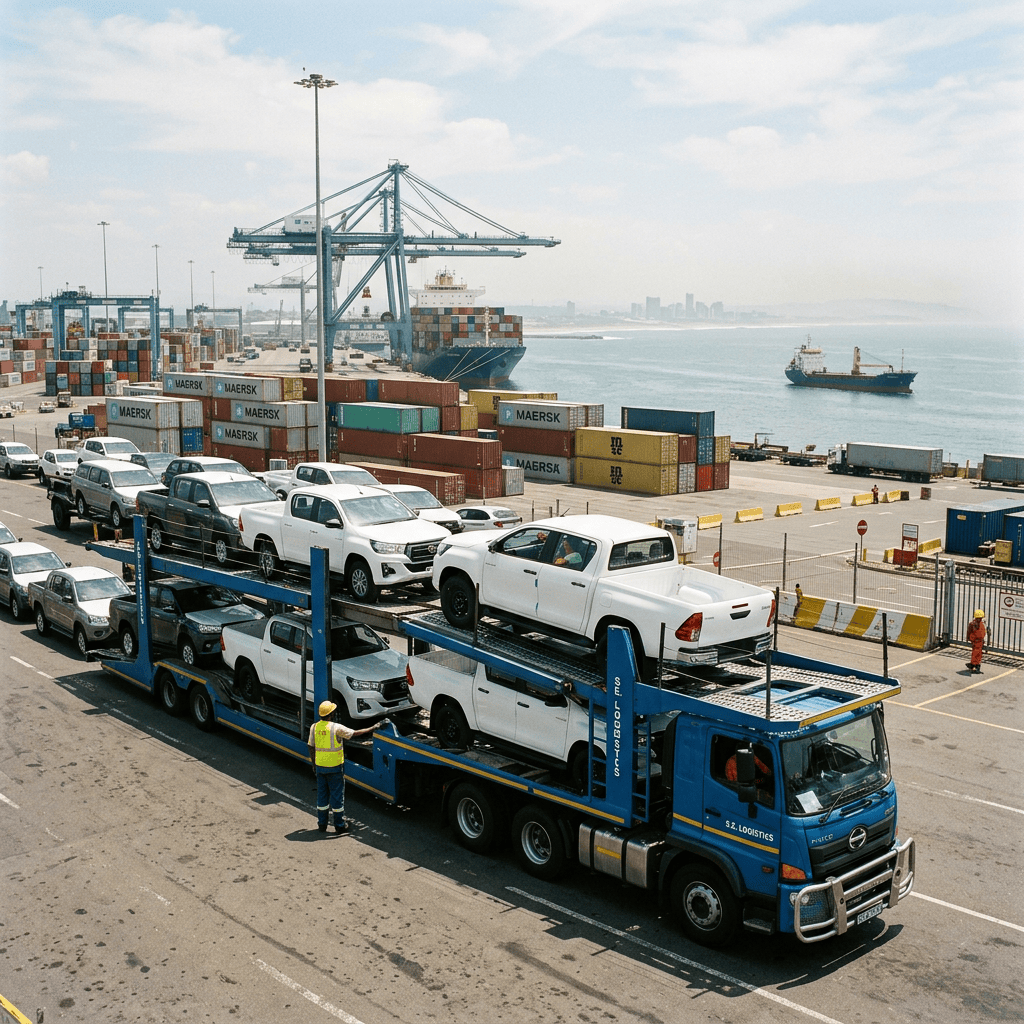
Moving vehicles by car carrier from Durban to Johannesburg means a road haul of roughly 560 to 600 kilometres along the N3, usually completed in about a day once a vehicle has left the port. It is one of the main routes for imported vehicles heading to Gauteng, and the road leg is often the easiest part. Port clearance, terminal collection windows and paperwork usually decide how quickly a vehicle reaches its destination.
Why the Durban to Johannesburg Corridor Matters
The Port of Durban is one of the main gateways for imported vehicles entering South Africa, and Gauteng holds the country’s largest concentration of dealerships and buyers. The N3 links the two and is among the busiest freight routes in the region. Vehicles arrive on roll-on/roll-off (ro-ro) vessels, are discharged at the port’s vehicle terminal, and are then cleared and collected for onward transport.
Step by Step: From Ship to Showroom
- Vessel discharge. Vehicles are driven off the ro-ro vessel and parked at the port’s vehicle terminal.
- Customs clearance. The importer or their clearing agent completes the SARS customs declaration and pays the applicable duties and VAT.
- Release. Once cleared, the terminal releases the vehicles for collection, usually within a set window before storage charges apply.
- Inspection at collection. Each vehicle is checked and photographed for existing damage before loading.
- Loading and securing. Vehicles are positioned and strapped onto the carrier.
- The N3 haul. The carrier travels north through KwaZulu-Natal and the Free State into Gauteng.
- Delivery and sign-off. Vehicles are unloaded at the dealer or storage yard and checked against the condition report.
The Route: What to Expect on the N3
The N3 climbs from the coast through Pietermaritzburg, Estcourt and Ladysmith, crosses the Drakensberg escarpment at Van Reenen’s Pass, and continues through Harrismith and Heidelberg before reaching Johannesburg. A few points are worth planning around:
- Van Reenen’s Pass: fog, heavy rain and occasional winter snow can slow or close traffic.
- Toll plazas: tolls are charged per trip and rise with axle count, so they add meaningfully to the cost of a fully loaded carrier.
- Heavy traffic: the corridor is shared with a large volume of freight trucks, so incidents and roadworks can cause delays.
- Driver hours: rest breaks and driving-hour limits mean some hauls include an overnight stop.
How Long Does a Car Carrier Take from Durban to Johannesburg?
The drive itself takes around eight to ten hours for a loaded truck, depending on traffic, weather and rest stops, so delivery in Gauteng typically happens the day after collection. The bigger variable is time at the port. Clearance, terminal congestion and collection windows can add days, and storage charges apply if vehicles remain past the free period.
For a sense of how road legs are classified, this comparison of short, long and cross-border hauls explains where a route of about 600 kilometres sits.
Documents and Compliance for Imported Vehicles
The importer or clearing agent usually handles the paperwork, but the carrier needs enough detail to collect the right vehicles. That typically includes:
- the bill of lading or release reference
- confirmation of customs clearance
- a list of VINs and vehicle descriptions
- a collection authority for the transporter
- a site contact and hours for delivery
Regulatory requirements sit behind these, including NRCS approval for imported vehicles and, for used vehicles, import permits from ITAC, which controls used-vehicle imports tightly. Confirm these are in order before booking collection.
Common Delays and How to Avoid Them
- Booking the carrier late: reserve capacity before the vessel’s estimated arrival.
- Missed collection windows: confirm terminal hours and any appointment requirements.
- Documentation mismatches: check every VIN against the release before the truck arrives.
- Weather at Van Reenen’s Pass: build a buffer into delivery dates, especially in winter.
- Damage disputes: photograph vehicles at both ends of the journey.
Live GPS visibility also removes guesswork for receiving yards. This piece on why real-time tracking matters in logistics covers what good tracking looks like.
What to Look for in a Carrier on This Route
Experience collecting from port terminals, goods-in-transit insurance that covers vehicles, consistent condition reporting and enough capacity for multi-car loads are the main things to check. A guide to vehicle delivery services in South Africa outlines what a dependable service should include.
What Affects the Cost of the Durban to Johannesburg Haul?
The distance is fixed, so cost is driven by a handful of other variables:
- Load size: a full multi-car carrier spreads fuel, tolls and driver time across more vehicles, which lowers the cost per vehicle.
- Vehicle mix: SUVs and double-cabs take more deck space and mass than hatchbacks, so fewer fit on each trip.
- Port waiting time: a truck queuing at the terminal costs money whether or not it is moving.
- Return load: carriers that can pick up a load heading back to Durban can often price more competitively than those returning empty.
- Urgency: short-notice bookings limit scheduling options.
Importers who consolidate several consignments from the same vessel often see the lowest per-vehicle cost, because the truck leaves the port full.
Insurance and Damage Claims Along the Corridor
Damage to imported vehicles can happen at sea, at the port terminal or on the road, so the point where responsibility changes hands matters. Inspection and photos at collection record the vehicle’s condition when the carrier takes over, and the sign-off at delivery records it when the carrier hands over. Importers should confirm that marine cargo cover ends and goods-in-transit cover begins without a gap between them.
Frequently Asked Questions
How far is Durban to Johannesburg by road?
The road distance is roughly 560 to 600 kilometres, depending on the exact start and end points, and most of it follows the N3.
How long does a car carrier take from Durban to Johannesburg?
The drive typically takes one day. Clearance and collection at the port come first and can take longer than the trip itself.
Can vehicles leave the port before customs clearance?
No. Imported vehicles must be cleared and released by the terminal before a carrier can collect them.
What affects the cost of the trip?
The number and size of vehicles, fuel and tolls, waiting time at the port, urgency, and whether the carrier returns loaded.


Leave a comment