
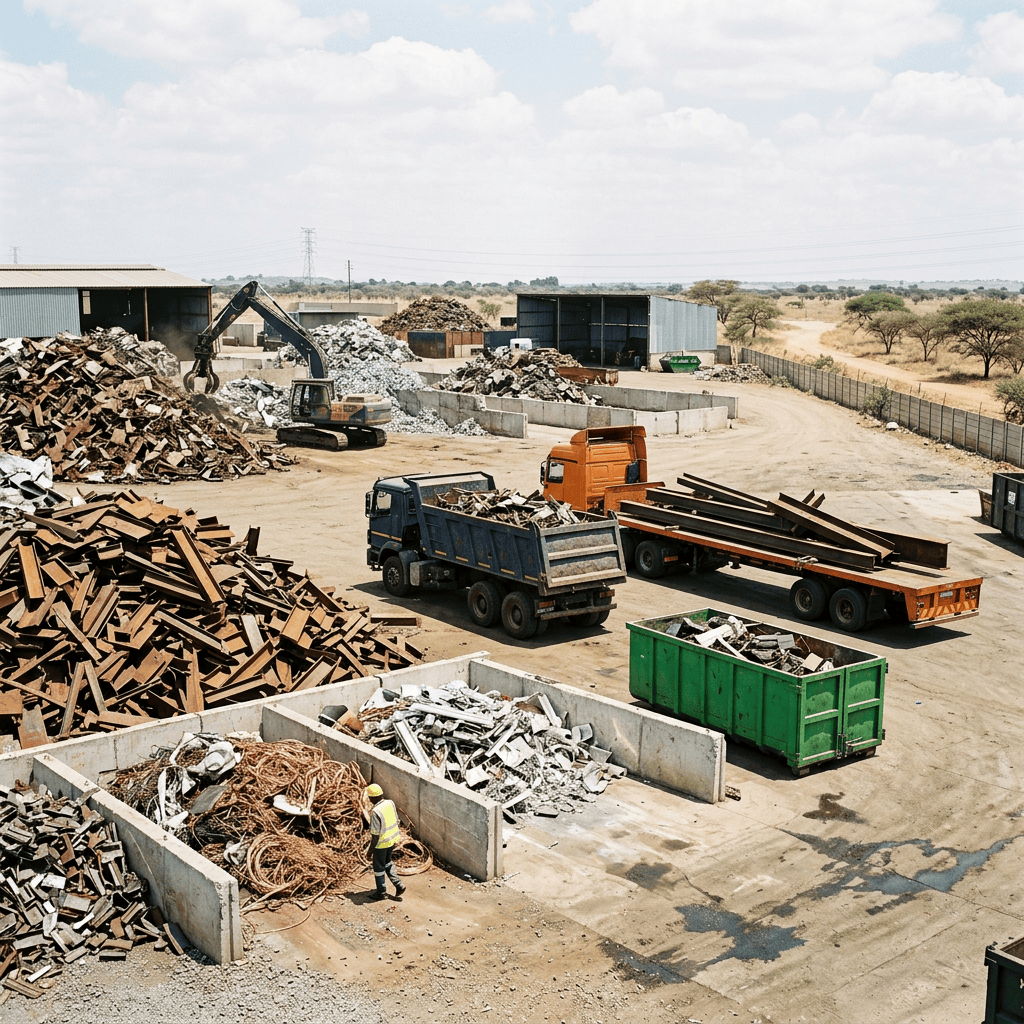
Scrap metal in South Africa is moved by road in tippers, flatbeds, roll-on roll-off container trucks and grab-loader vehicles, depending on the type and volume of material. The transport itself is only part of the challenge, because scrap dealing is regulated to combat theft of metal and infrastructure. Transporters, sellers and buyers should keep proper records, know where the material came from and follow load-securing and weight rules. Costs depend on distance, metal type, load size and turnaround time.
Scrap metal is one of the country’s most important recyclable streams, feeding steel mills, foundries and smelters. It is also a sector where documentation and legal compliance matter a great deal, since stolen cable, rail components and municipal metalwork have long been a problem. Good logistics therefore means moving material efficiently and being able to prove it was moved legitimately.
What counts as scrap metal
Scrap is usually divided into two broad families.
Ferrous scrap contains iron and is magnetic. It includes steel offcuts, structural steel, vehicle bodies, machinery, reinforcing bar and heavy melting steel. It is the largest volume by weight and feeds steelmaking.
Non-ferrous scrap includes copper, aluminium, brass, lead, zinc and stainless steel. These metals are worth much more per kilogram, and are often the target of theft, so they receive more scrutiny.
The type of metal affects the price paid by the buyer, the handling method and the level of security and paperwork required.
Common transport methods
- Tipper trucks. Suitable for loose, dense scrap such as turnings, shredded material or small offcuts, which can be tipped at the yard.
- Flatbeds and drop-sides. Used for longer or bulky items such as structural steel, machinery and vehicle bodies. Load securing is critical.
- Roll-on roll-off container trucks. A hook-lift truck carries a steel bin that is loaded on site and then hauled to the yard. This is common for factories, demolition sites and large generators of scrap.
- Grab-loader trucks. Vehicles fitted with a crane and grab that pick up loose scrap directly from the ground.
- Skip trucks. Handle skip bins at smaller sites and workshops.
- Walking-floor or curtain-side trailers. Sometimes used for baled or compacted scrap, depending on the operation.
Choosing the right vehicle affects loading time, safety and cost. A roll-on roll-off system saves time at the source, while a flatbed with a crane may suit irregular, bulky material.
Legal and compliance issues
Scrap metal is regulated in South Africa because of the harm caused by metal theft. The details change from time to time, and dealers and transporters are expected to keep up. In broad terms:
- Dealers are regulated. Businesses that buy and sell second-hand goods and scrap metal are generally required to register and keep records of what they buy and from whom, under second-hand goods legislation.
- Infrastructure metals are protected. Legislation targets the theft, possession and trade of essential infrastructure materials, such as cable and railway components, with serious penalties.
- Exports are controlled. Rules on exporting scrap metal, particularly ferrous scrap, have been the subject of trade policy measures, so check current requirements before any export.
- Transporters can be questioned. Police and traffic officers may stop vehicles carrying scrap and ask for proof of origin.
Because of this, carry documents such as delivery notes, invoices or waybills that show where the load came from, where it is going, the quantity and the parties involved. Do not accept loads from sellers who cannot explain where the metal came from. Always confirm the current legal position with the relevant authority or a specialist, since the rules can change.
Load securing and safety
Scrap loads are heavy, irregular and often sharp, so securing them properly is essential.
- Use suitable restraints. Chains, straps and binders should be rated for the load and in good condition.
- Cover loose material. Nets or tarpaulins prevent scrap from falling onto the road.
- Balance the load. Heavy items should be positioned to keep axle weights within legal limits and the vehicle stable.
- Watch for hazardous items. Batteries, gas cylinders, radiators with fluids and fuel tanks can be dangerous. They should be handled and transported separately according to the rules.
- Follow recognised standards. Load-securing practices are guided by South African standards, and drivers should understand them.
- Protect drivers and loaders. Personal protective equipment, safe loading zones and trained operators reduce accidents.
What drives the cost
- Distance. Scrap is a lower-value product than many commodities, so haulage can eat into margins on long routes.
- Metal type. High-value non-ferrous loads may need security, tracking and insurance.
- Load size and vehicle type. Full, legal payloads reduce the cost per ton.
- Loading method. Cranes, grabs and roll-on roll-off systems affect time and cost.
- Turnaround time. Queues at yards and weighbridges tie up trucks.
- Return loads. An empty return leg is priced into the trip.
- Fuel and tolls. Both increase with distance.
- Compliance. Paperwork, weighing and record-keeping take time and effort.
How scrap is paid for
Scrap is usually bought by weight and by grade. Loads are weighed on a calibrated weighbridge, inspected for grade and contamination, and then paid for at the buyer’s rate for that grade. Dirty or mixed loads often attract lower prices, so sorting at source pays off. Ask the buyer how they grade material and how disputes are handled.
Practical tips for generators of scrap
- Sort at source into ferrous and non-ferrous, and by grade where possible.
- Choose the right bin or vehicle for the material and volume.
- Weigh loads and keep the tickets.
- Keep records of every removal, including who collected it.
- Use registered, reputable dealers and transporters, and check their permits and insurance.
Related transport guides
Scrap transport uses the same core trucks as other bulk and heavy loads. If you need a vehicle for a one-off clear-out or a project, our article on the cost of hiring a truck for a day in South Africa explains how rental pricing is built, and the truck rental page lists the vehicle categories. Drivers of heavy combinations should also read our guide to Code 14 licence requirements.
Frequently asked questions
What trucks are used to transport scrap metal?
Tippers, flatbeds, roll-on roll-off container trucks and grab-loader trucks are common, depending on the material.
Do I need paperwork to transport scrap metal?
You should carry documents showing the origin, destination and quantity, because scrap is often checked by police and traffic officers.
Is it legal to transport scrap metal?
Yes, if the material is legally sourced and the transport and dealing comply with the relevant laws.
What is the difference between ferrous and non-ferrous scrap?
Ferrous contains iron and is magnetic, while non-ferrous includes metals such as copper and aluminium.
How is scrap priced?
By weight and grade, after weighing and inspection at the buyer’s yard.


Leave a comment