
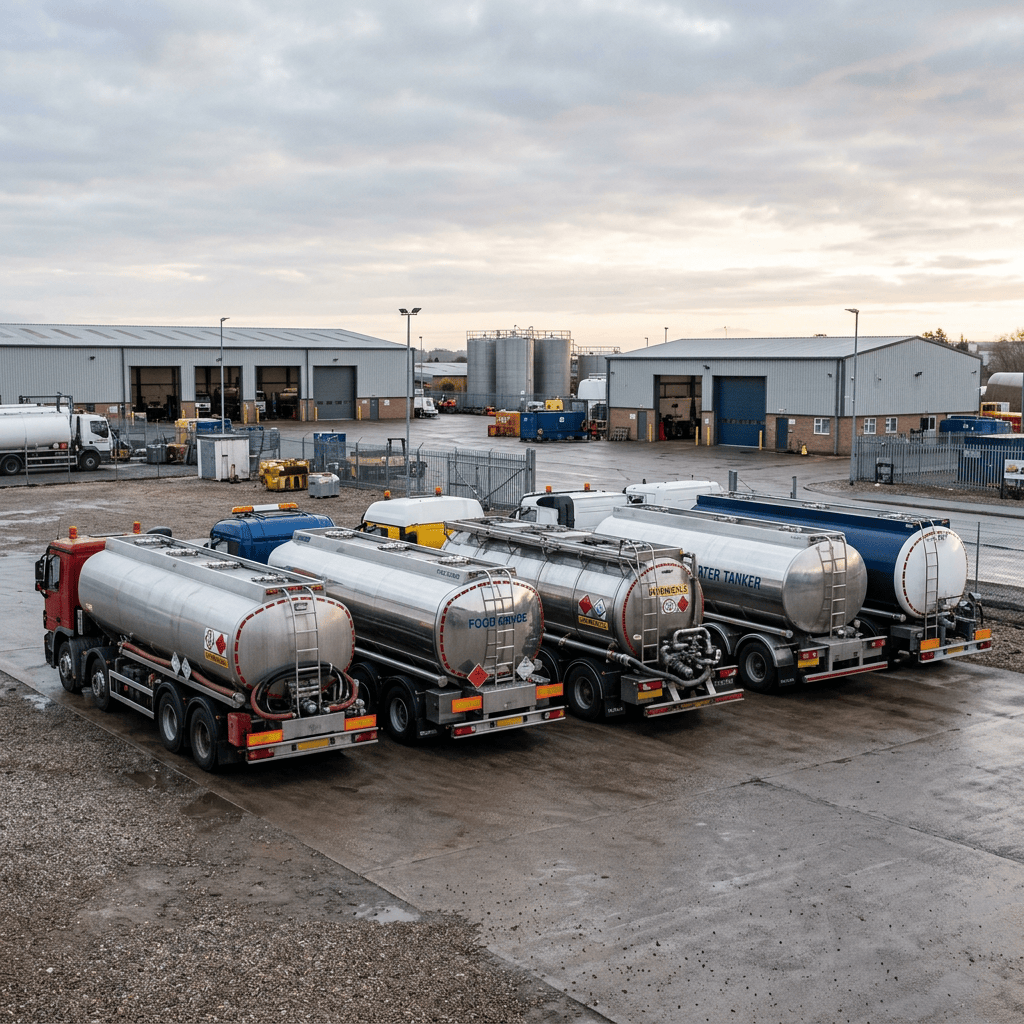
Tanker truck hire covers vehicles built to move liquids and other bulk fluids by road, such as fuel, water, chemicals, edible oils, milk, wine and bitumen. In South Africa, the hire price depends on the tanker type, capacity, distance, the product and whether a driver is included. If the product is a dangerous good, strict legal requirements apply to the vehicle, the driver, the documentation and the operator, so compliance should come before price.
Liquids are unforgiving to transport. They move, they can contaminate, and some are hazardous. That makes tanker hire more specialised than most other truck hire, and it is why understanding the basics helps you avoid costly and sometimes dangerous mistakes.
What tankers are used for
- Fuel and petroleum products. Diesel, petrol and paraffin transported to depots, mines, farms and service stations.
- Water. Potable water for communities and construction, and non-potable water for dust suppression on mines and roads.
- Chemicals. Industrial chemicals, acids and solvents, many of which are classified as dangerous goods.
- Food-grade liquids. Milk, edible oils, juices, wine and molasses.
- Bitumen and asphalt binders. Heated products for road construction.
- Gases. Specialised pressure tankers for liquefied gases, generally a separate category of hire.
The product decides the tanker, so start with what you need to move and work backwards.
Types of tankers
Fuel tankers. Usually compartmented, so different products can be carried at the same time without mixing. They are built to strict standards for petroleum products and equipped with safety features.
Water tankers. Range from small rigid units to large semi-trailers. Potable water needs a tank that is clean and safe for drinking water, while dust suppression tankers often have spray equipment.
Chemical tankers. Often made of stainless steel or lined to resist corrosion. The material must be compatible with the chemical carried.
Food-grade tankers. Stainless steel with smooth interior surfaces, often insulated or temperature controlled. They must be cleaned to a food-safe standard between loads.
Bitumen tankers. Insulated and heated to keep the product fluid.
Compartmented and baffled tanks. Baffles inside the tank reduce the sloshing of liquid during braking and cornering, which improves stability.
Dangerous goods: the part you cannot skip
Many liquids commonly moved by tanker are classified as dangerous goods, including most fuels and many chemicals. In South Africa, the transport of dangerous goods by road is regulated under Chapter VIII of the National Road Traffic Regulations, which incorporate a set of South African National Standards. These cover the classification of substances, packaging, inspection of vehicles, operational requirements and emergency information systems. In broad terms, several parties carry responsibilities:
- The consignor must classify the goods correctly, ensure they are properly loaded by trained people and provide the driver with a signed dangerous goods declaration.
- The operator must ensure the vehicle is properly equipped, that the operator card and warning signs are displayed, that the transport emergency information is available and that the driver is properly trained and holds the correct permit.
- The driver must be trained, hold the appropriate professional driving permit for dangerous goods and carry the required documents and safety equipment.
- The consignee also has responsibilities on receipt of the goods.
Tankers for petroleum products and other dangerous goods must meet specific design and inspection standards. Requirements also cover routes, and in general, vehicles carrying dangerous goods are expected to use national roads except for local collection or delivery. These rules are detailed and change from time to time, so always verify current requirements with a specialist or the relevant authority, and insist that any hire company can show compliance.
If your load is dangerous goods, hire from an operator with a track record in the field. Never accept a vague assurance.
What affects the price
Tanker hire prices are usually quoted per trip, per kilometre, per day or per contract, depending on the arrangement. The main factors are:
- Capacity. Larger tankers cost more, but often lower the price per litre.
- Product. Dangerous goods, food-grade and heated products need more specialised equipment and compliance.
- Distance and duration. Long trips, waiting time at depots and overnight stops all add cost.
- Cleaning. Food-grade and chemical tankers usually need cleaning between loads, and this may be charged separately.
- Return loads. A tanker that returns empty carries the cost of the return leg, and some operators price this in.
- Driver and compliance costs. Trained, permitted drivers and compliance documentation add to cost.
- Pumping and equipment. Pumps, hoses and metering equipment may be included or extra.
- Insurance. Cover for hazardous or high-value loads costs more.
Questions to ask before hiring
- What product am I moving, and is it classified as a dangerous good?
- Is the tanker built and approved for that product?
- What was the last product carried, and how was the tank cleaned?
- Is a trained driver with the correct dangerous goods permit included?
- Are the operator card, warning placards and emergency information in place?
- Who supplies the pump and hoses, and who handles loading and offloading?
- What insurance covers a spill or contamination, and what are the exclusions?
- What is the plan for a breakdown or leak?
Environmental and safety considerations
A spill can be costly and harmful, so prevention matters. Confirm that the tanker is leak-free, that valves and seals are in good condition and that the driver knows the emergency procedure. Loading and offloading areas should have suitable spill containment, and everyone involved should know who to call in an emergency. For non-hazardous products such as water, a contaminated tank can still cause a serious problem, especially if the water is intended for drinking or food processing.
Regional and industry considerations
Demand for tankers follows industry. Mines and construction sites need water and fuel, farms need water and fuel, and ports handle bulk liquids in and out. In the coastal port region, bulk liquid movements are closely tied to port activity, which our guide to truck rental companies in Durban touches on from the general truck rental side. In the platinum belt, mines and construction sites drive demand for water and fuel tankers, and our Rustenburg buyer’s guide explains how local conditions affect hire. For an overview of the vehicle categories available, see the truck rental page.
Frequently asked questions
How much does tanker truck hire cost in South Africa?
There is no standard rate. Cost depends on tanker type, capacity, product, distance and whether a driver is included, so request an itemised quote.
Do I need a special permit to move fuel by tanker?
Fuel is a dangerous good, so the driver, the vehicle and the operator must meet the dangerous goods requirements. Confirm compliance with your supplier.
Can the same tanker carry water and chemicals?
Generally no, unless it is properly cleaned and suitable. Cross-contamination is a serious risk, so ask about the tanker’s history.
Can I hire a tanker without a driver?
Some operators allow it for non-hazardous products, but dangerous goods normally require trained, permitted drivers.
How far ahead should I book?
Book early for specialised or dangerous goods tankers, since compliant vehicles and drivers are limited.


Leave a comment