
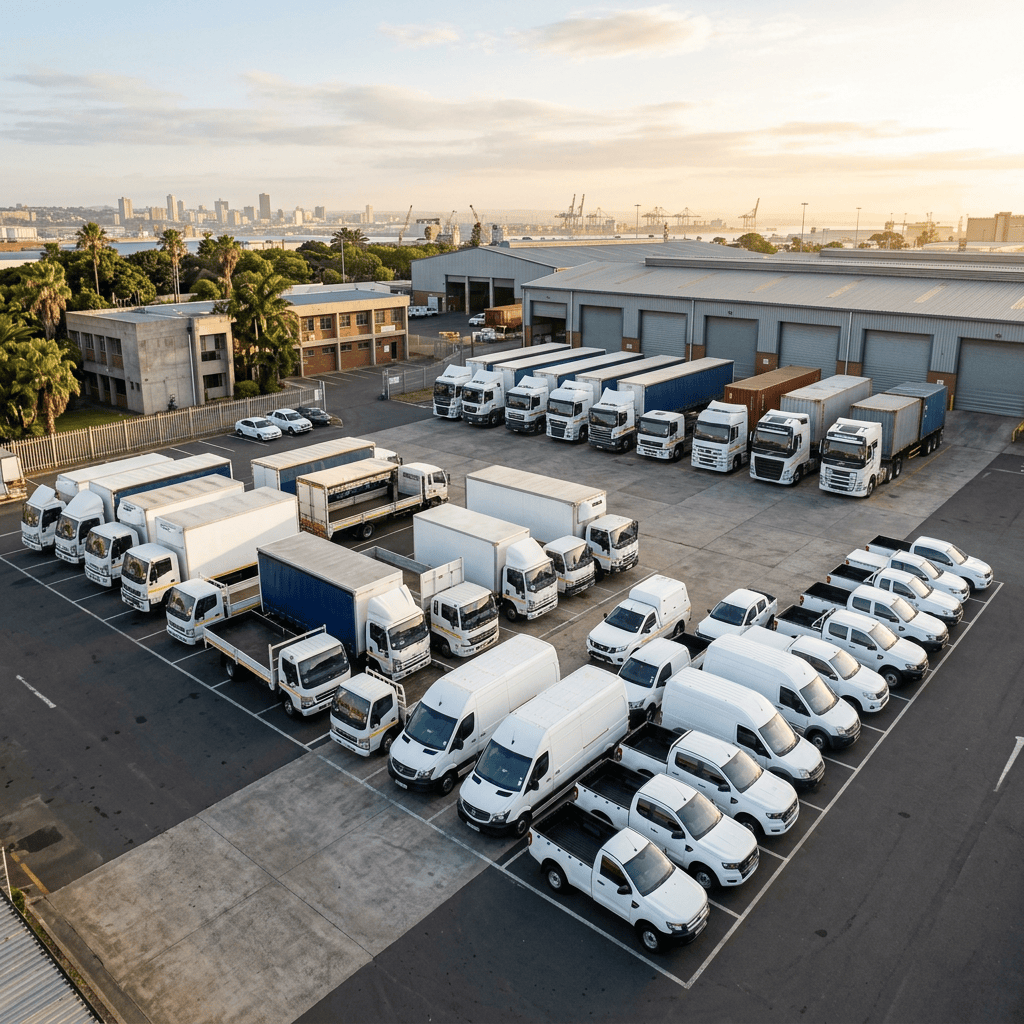
Truck rental rates in Durban depend on vehicle size, hire duration, distance, fuel arrangements and whether a driver is included. Aggregator listings for light pickup-type vehicles show averages of around R973 per day, with individual deals from roughly R466 to R788 per day. Heavier rigid trucks and truck tractors are priced by quote, so always request an itemised offer for your specific job.
Durban is South Africa’s busiest port city and a major freight gateway. That creates a competitive rental market, from single-vehicle operators to larger fleets serving importers, retailers, builders and event companies.
What a Durban rental fleet can look like
A typical Durban truck rental company offers a spread of vehicles. One Pinetown-based provider, for example, lists half-ton and one-ton bakkies, 2.2-ton panel vans, 4-ton and 8-ton trucks and 26-ton truck tractors. In broad terms you will find:
- Bakkies and panel vans for small loads and last-mile deliveries.
- Four-ton trucks in drop-side, enclosed or refrigerated variants.
- Eight-ton rigids, including curtain-side, enclosed and tail-lift options.
- Truck tractors and trailers for heavy or long-haul freight.
- Specialised vehicles such as tippers, tautliners, car carriers and low beds.
Availability varies, so confirm the exact vehicle rather than relying on a category name.
Understanding the rates
Published daily prices are a starting point, not the final cost. Aggregator figures reflect small vehicles on specific dates, so treat them as indicative only. For anything larger than a bakkie, ask for a written quote covering:
- The base rate, whether daily, weekly or monthly.
- Kilometre allowance and the excess rate.
- Fuel policy, full-to-full or included.
- Driver, overtime and waiting time.
- Tolls, which matter on the N2 and N3 corridors.
- Insurance, excess and goods-in-transit cover.
- Delivery and collection fees.
What pushes prices up or down
- Season. The festive period and month-end peaks can tighten supply and lift rates.
- Vehicle type. Refrigerated and tail-lift trucks cost more than plain drop-sides.
- Distance. A local Pinetown to Umhlanga run is a very different job from Durban to Johannesburg.
- Duration. Longer hire terms often carry a lower daily rate.
- Driver inclusion. A supplied driver adds cost but can reduce risk.
- Booking lead time. Last-minute requests limit choice and negotiating room.
Durban-specific factors
Port and container work. Port-related jobs may need particular vehicles, trailers and access arrangements. Confirm gate access rules, waiting time charges and whether the operator has experience with container handling.
Corridors and tolls. Freight leaving Durban typically uses the N3 towards Gauteng or the N2 along the coast. Toll costs on long trips are significant, so make sure they are itemised.
Industrial areas. Depots and distribution centres cluster around areas such as Pinetown, Jacobs, Prospecton and Isipingo. A supplier close to your loading point can reduce empty running and delivery fees.
Weather and traffic. Coastal rain and congestion around the port can affect schedules. Build buffer time into delivery windows and ask how delays are charged.
Working hours. Some depots only operate on weekdays. If you need a weekend or after-hours pick-up, ask before booking.
Choosing the right vehicle
Match the truck to the load rather than defaulting to the biggest option. An oversized truck costs more to hire and to fuel, while an undersized one forces a second trip. Check the payload, not only the tonnage label, and think about how the load will be secured. Palletised goods suit tautliners and curtain-siders, bulk material suits tippers, and vehicles or machinery need carriers or low beds.
If you are comparing markets, our buyer’s guide to truck rental in Rustenburg covers similar questions for the mining and construction belt inland.
Checks before you sign
- Company details. Registration, physical address and a real fleet you can inspect.
- Operating permits. Goods moved for reward should be carried under the correct licences.
- Insurance. Confirm what is covered, what is excluded and how large the excess is.
- Vehicle condition. Ask for the roadworthy status, tyre condition and service records.
- Breakdown support. Ask how quickly a replacement vehicle can be supplied.
- Contract terms. Look at cancellation, damage and late return clauses.
- Driver details. If a driver is included, confirm licence code and permits.
More detail on categories and service options is available on the truck rental page and the services overview.
Avoiding hidden costs
The cheapest advertised rate is not always the cheapest outcome. Watch for fuel top-up charges, cleaning fees, mileage overage, after-hours surcharges and waiting time at loading points. A short conversation about these items up front usually costs nothing, while discovering them on the invoice does.
Frequently asked questions
How much does it cost to rent a truck in Durban?
Light vehicles are listed at roughly R466 to R1,146 per day on aggregator sites, depending on the model and dates. Heavier trucks are priced by quote.
Do I need a special licence to drive a rental truck?
Heavier vehicles need the correct licence code, and some require a professional driving permit. Check before you book.
Can I rent a truck with a driver in Durban?
Yes, many operators offer this. It is a common choice for heavy or long-distance loads.
Are tolls included in the quote?
Not always. Ask for tolls to be listed separately so you can compare quotes fairly.
How far ahead should I book?
For standard vehicles, a few days can be enough, but book earlier for the festive season, month-end or specialised vehicles.


Leave a comment