
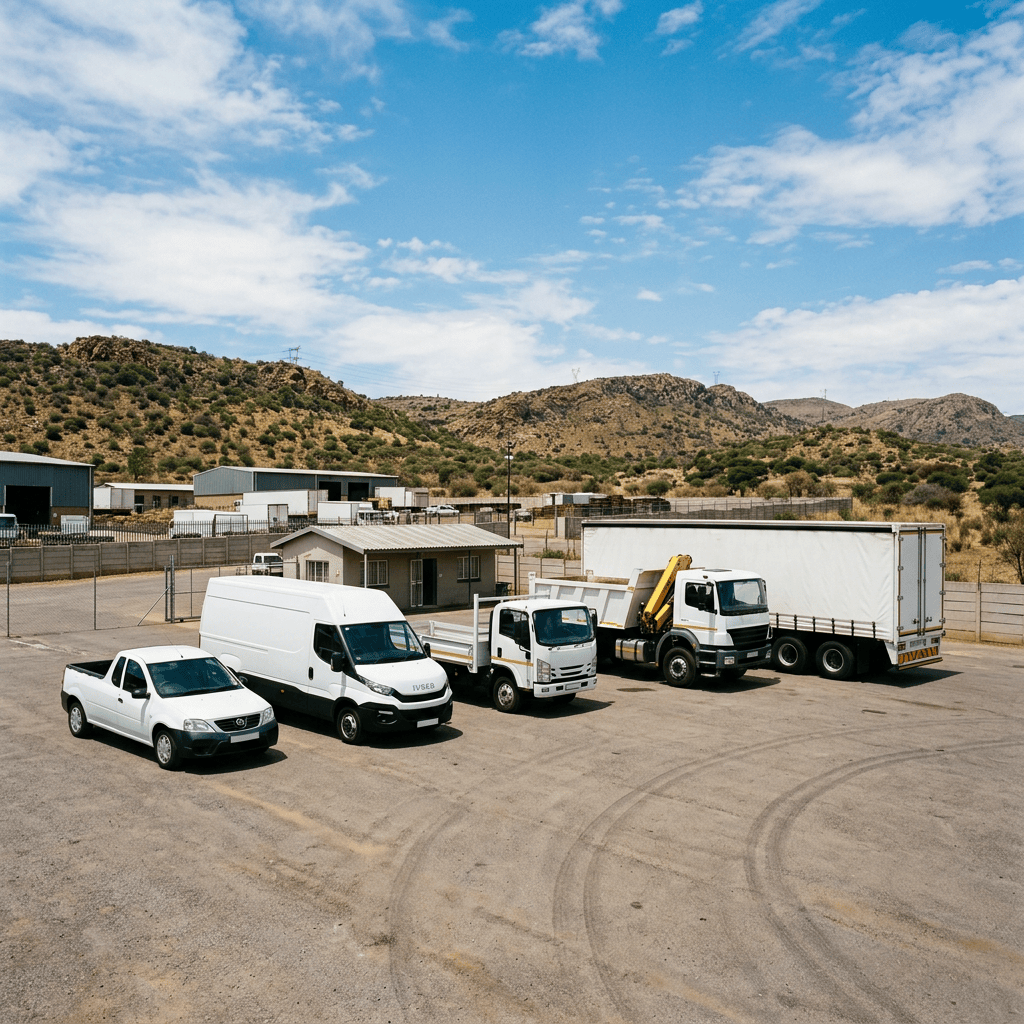
Truck rental in Rustenburg ranges from bakkies and panel vans for small moves to 8-ton rigids and heavier trucks for mining, construction and agricultural freight. Quotes are normally built from a daily or monthly rate, a kilometre allowance, a fuel arrangement, insurance and whether a driver is supplied. Before choosing a company, confirm the fleet, vehicle condition, insurance cover, breakdown support and whether the quote covers your actual route.
Rustenburg sits in the heart of the platinum belt in North West, roughly 100 to 120 km from both Pretoria and Johannesburg by road. Mines, construction sites, farms, retailers and households all create steady demand for trucks. That demand attracts many providers, and the quality gap between them can be wide.
Define the job before asking for a price
The most common mistake is requesting a quote before defining the load. Have these details ready:
- Type of cargo: building material, machinery, furniture, produce, bulk goods or vehicles.
- Weight and volume: payload capacity matters more than the headline size of the vehicle.
- Loading method: hand-loaded, forklift, tail-lift, crane or tipper.
- Route: local within Rustenburg, in-province, or long haul into Gauteng, Limpopo or beyond.
- Duration: a day, a week, a season or a long-term contract.
Common truck types and what they suit
- Bakkies and panel vans: small deliveries and household moves.
- One to four ton trucks: small business freight and light building supplies.
- Eight ton rigids: larger household moves, retail stock and general freight.
- Tautliners and curtain-siders: palletised goods that need side loading and weather protection.
- Side tippers and tipper trucks: aggregates, sand, rubble and bulk material linked to mining and construction.
- Flatbeds and low beds: machinery and heavy equipment.
- Car carriers: several vehicles per trip, useful for dealerships and fleet relocations.
Self-drive or with a driver?
Self-drive is cheaper on paper, but it places insurance, licensing and liability on you. Heavier vehicles need the correct licence code, and vehicles carrying goods for reward may need a professional driving permit. A supplied driver adds cost but shifts operational risk and usually brings route experience. For heavy or specialised loads, a driver is often the safer choice.
How rental pricing is structured
Expect quotes to combine some or all of the following:
- Base rate, charged daily, weekly, monthly or per trip.
- Kilometre allowance and a rate for extra kilometres.
- Fuel policy, either full-to-full or included in the price.
- Driver, overtime and waiting time where a driver is supplied.
- Tolls and permits, especially on long-distance routes.
- Insurance and excess on the vehicle and the goods.
- Delivery and collection fees if the truck is not picked up from the depot.
Always ask for an itemised quote. A low headline rate that leaves out fuel, tolls and waiting time may end up costing more than a higher all-in price. Get at least three quotes for the identical job so you are comparing like with like.
What to check about the company
- Registration and paperwork. Confirm company registration, tax compliance and, for corporate or mining clients, a valid B-BBEE certificate.
- Operating licences. Vehicles and operators moving goods for reward should hold the appropriate permits.
- Insurance. Ask about vehicle cover, goods-in-transit cover and the excess payable in a claim.
- Vehicle condition. Ask for roadworthy certificates, tyre condition and service history.
- Tracking and support. Fleet tracking and 24-hour breakdown assistance reduce costly downtime.
- Contract terms. Check clauses on cancellation, damage, late return and replacement vehicles.
- References. Ask for past clients in your own sector, particularly in mining or construction.
Rustenburg-specific considerations
- Mine and site access. Many sites require inductions, safety compliance and approved vehicles before entry, so confirm requirements in advance.
- Road conditions. Heavy traffic on the N4 and R510 corridors, together with road wear near mining areas, affects travel time and vehicle wear.
- Seasonal demand. Construction and agricultural peaks can tighten supply, so book earlier during busy periods.
- Overloading. Overloading is illegal and dangerous, and it can invalidate insurance. Confirm the vehicle’s legal payload before you load.
Red flags
- No fleet you can inspect.
- Quotes given only by messaging apps, with no documented terms.
- Prices far below the market with no explanation.
- No clear answer to “what happens if the truck breaks down?”
Local hire versus a company outside the area
A depot in Rustenburg can respond faster to breakdowns and cut delivery fees, which matters on short-notice jobs. A larger provider outside the area may offer a bigger or more specialised fleet, which matters for heavy or unusual loads. Weigh response time against fleet choice for your particular job.
For an overview of the vehicle categories available, see the truck rental page and the services overview. If your project spans regions, our comparison of truck rental companies in Durban shows how pricing and logistics differ on the coast.
Frequently asked questions
How much does truck rental in Rustenburg cost?
It depends on capacity, duration, distance and whether a driver is included. Get at least three itemised quotes for the same job.
What licence do I need to drive a rental truck?
Light vehicles need a standard licence. Heavier trucks require the correct code, and some categories require a professional driving permit.
Can I rent a truck with a driver?
Yes, many companies offer this. It is often the safer route for heavy or specialised loads.
Is insurance included in the rental price?
Not always. Ask about vehicle cover, excess and goods-in-transit cover separately.
How far in advance should I book?
For standard trucks, a few days can be enough. For specialised vehicles or long-term contracts, plan weeks ahead.


Leave a comment