
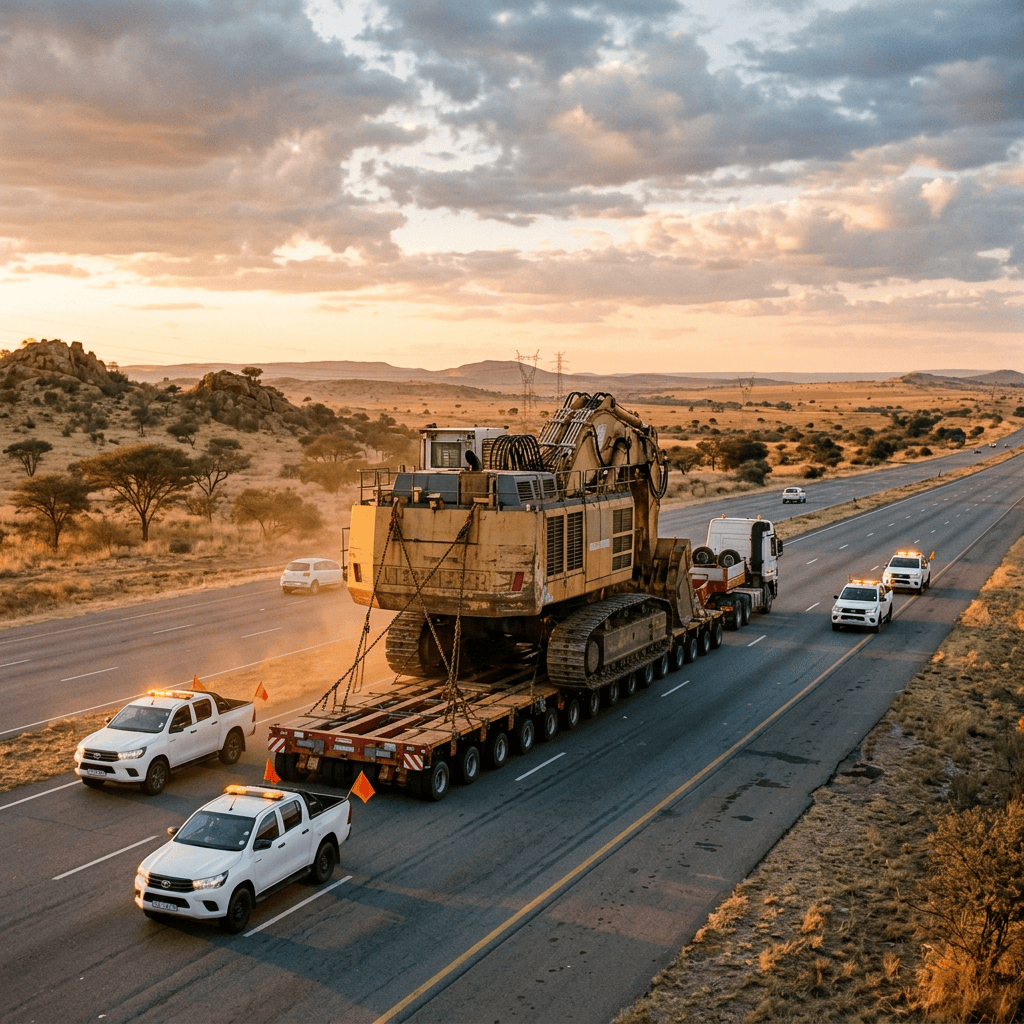
An abnormal load in South Africa is a load, or a vehicle carrying it, that exceeds the legal dimension or mass limits set by the National Road Traffic Regulations and cannot reasonably be broken into smaller legal loads. Moving one requires an exemption permit issued by the relevant provincial road authority, and the permit usually comes with conditions such as approved routes, travel times, warning signs and escorts. Costs depend on the load, distance, permits, escort requirements and planning time.
Whether it is a mining machine, a transformer, a crane or a prefabricated building module, some loads simply cannot be moved as ordinary freight. Moving them legally takes planning, paperwork and the right equipment. This guide explains the basics in plain language.
What makes a load abnormal
South African law sets limits on the size and weight of vehicles and their loads on public roads. A vehicle or load can be abnormal because of its dimensions, its mass, or both. In broad terms, the common dimension limits include:
- Width: 2.6 m.
- Height: 4.3 m.
- Length: 12.5 m for a single vehicle, 18.5 m for an articulated vehicle and 22 m for other combinations.
- Overhangs and load projections: limits on how far the body or the cargo can extend beyond the vehicle.
- Wheelbase: limits on the wheelbase of certain trailers.
Mass limits apply to the total combination and to individual axles and axle groups. A load can be within the total limit and still be abnormal if one axle group is overloaded, which is why load positioning on the trailer matters so much. Any single breach is enough to make a movement abnormal.
These figures are a summary. Exact limits and definitions come from the National Road Traffic Regulations and the technical guidelines known as TRH 11, so always confirm with the relevant authority or a specialist transporter.
The indivisibility rule
Permits are generally only issued for indivisible loads, meaning loads that cannot be dismantled into legal units without disproportionate effort, cost or risk of damage. If a load can reasonably be split into parts that fit legal limits, or if it can be moved legally on a different vehicle, a permit is unlikely to be granted. A ten-ton machine that can legally travel on a suitable multi-axle trailer, for example, would not usually qualify.
This is a key planning point. Before applying, check whether the load can be dismantled, repositioned or transported on a different type of vehicle. Our guide to low bed trailer hire in South Africa explains how trailer choice can keep some heavy loads within legal limits.
How the permit process works
Abnormal load exemption permits are issued under Section 81 of the National Road Traffic Act by the provincial road authorities, with input from local and metropolitan authorities where necessary. The process generally involves:
- Describing the load. You supply the weight, dimensions, description and, often, drawings or specifications.
- Describing the vehicle. The permit application covers the truck, trailer, axle configuration and total loaded dimensions and mass.
- Proposing a route. The applicant proposes origin, destination and the roads to be used. Authorities check for bridges, overhead cables, narrow sections and other restrictions.
- Assessment. The authority assesses the application and may adjust the route, timing or conditions.
- Issue of the permit. A permit is granted for a defined period and with specific conditions.
A route that crosses several provinces will normally involve more than one authority, so allow extra time. Applications should be made well ahead of the planned move, as processing times vary and route assessments can take time.
Escorts, signs and other conditions
Permits normally set out conditions to protect other road users. Depending on how abnormal the load is, these may include:
- Escort vehicles, in front, behind or both, sometimes with specific requirements for equipment and driver qualifications.
- Warning flags at the extremities of the load.
- Abnormal load warning boards on the front and rear, meeting the relevant specifications.
- Amber flashing lights on the cab or on the load.
- Marker lamps and reflectors to show the extent of the load.
- Speed restrictions, often with a displayed speed board.
- Travel time restrictions, such as no travel in peak traffic, at night or on public holidays.
- A prescribed route, which must be followed closely.
Breaching these conditions can invalidate the permit and lead to fines, delays and insurance problems.
What drives the cost
Abnormal load costs vary widely, so avoid relying on rough figures. The main cost drivers are:
- Equipment. Specialised trailers, multi-axle configurations and powerful prime movers cost more than standard units.
- Distance and duration. Slower speeds and restricted travel times can turn a short distance into a multi-day trip.
- Permits and route surveys. Application fees, engineering assessments and route checks add to the cost.
- Escorts. Escort vehicles, crews and, where required, traffic escorts are a significant part of the price.
- Utility and infrastructure work. If power lines or signs need to be lifted or moved, the costs can be considerable.
- Loading and offloading. Cranes, jacking systems and specialist labour may be needed at each end.
- Insurance. Higher-value loads need suitable cover for the trip.
- Delays. Waiting for permits, weather or access can extend the job and the bill.
Ask for an itemised quote that separates the transport, the permit costs, the escorts and any contingency. A quote that lumps everything together makes comparison difficult.
Choosing an abnormal load transporter
Look for a transporter with proven experience of similar loads, valid operating permits, appropriate insurance and drivers who hold the correct licences and training. Ask to see the equipment, request references and confirm that the company understands the permit process for your route. If you also require standard trucks or supporting vehicles for the same project, the truck rental page outlines the general categories available, and our guide to truck rental in Rustenburg covers the mining and construction belt where many of these moves originate.
Planning checklist
- Confirm accurate weight and dimensions, including any attachments.
- Decide whether the load can be dismantled or moved on a different trailer.
- Choose the right trailer and prime mover for the mass and dimensions.
- Start the permit application early and allow for multiple provinces.
- Survey the route for bridges, cables, narrow sections and road works.
- Plan escorts, signage and timing.
- Confirm insurance and responsibility for damage.
- Prepare loading and offloading sites, including access and ground conditions.
Frequently asked questions
Who issues abnormal load permits in South Africa?
They are normally issued by the provincial road authorities, sometimes with input from local and metropolitan authorities.
How long does a permit take?
It varies with the province, the complexity of the load and the route. Apply as early as you can.
Do all abnormal loads need an escort?
Not always. The permit conditions specify whether escorts are needed and what type.
Can I move an abnormal load at night?
Often restricted. The permit conditions set the permitted travel times.
What happens if I move a load without a permit?
You risk fines, delays, having the vehicle stopped and problems with insurance, apart from the safety risk.


Leave a comment