
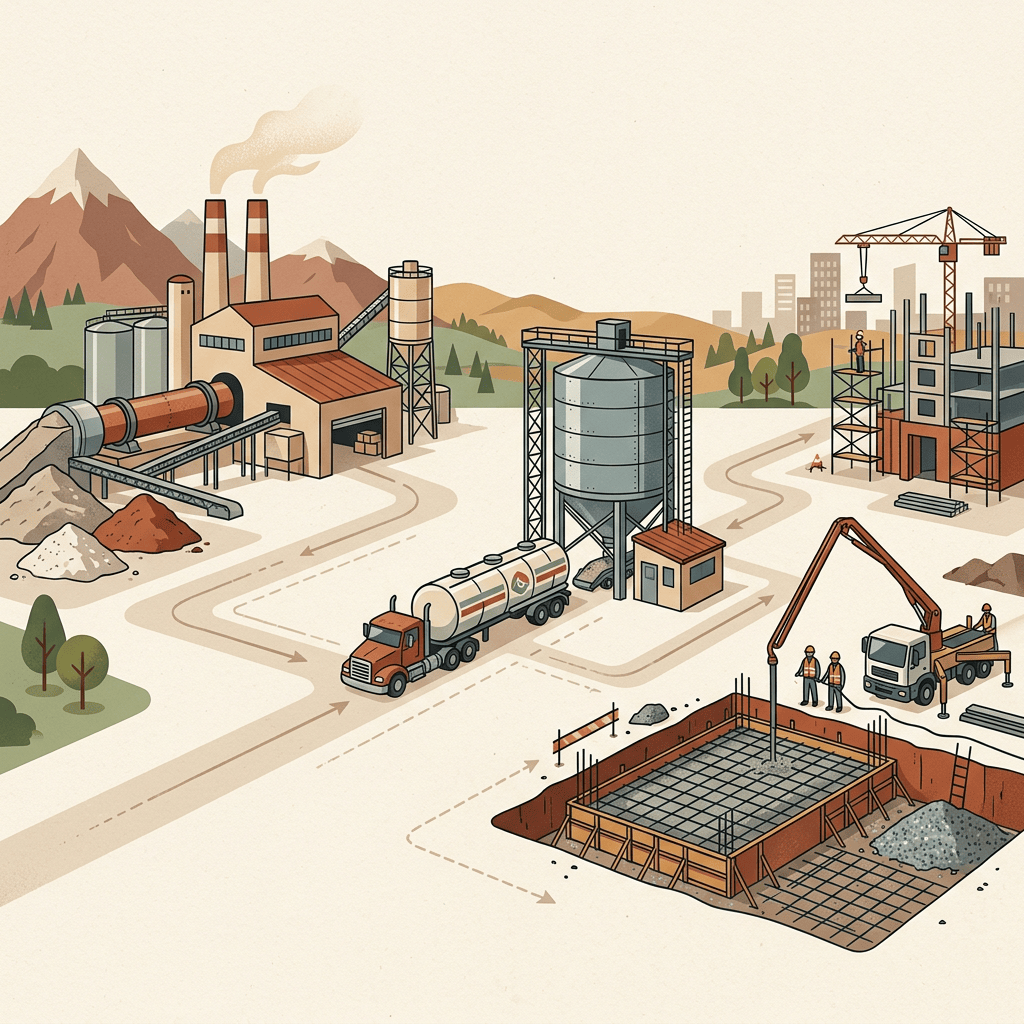
Bulk cement in South Africa is usually delivered in pneumatic tankers that blow the cement into a silo on site, while smaller jobs use 50 kg bags delivered on pallets by tautliner or flatbed. Contractors should choose between the two based on volume, storage space and speed of use, and should confirm silo capacity, site access, offloading arrangements and delivery scheduling before ordering. Keeping cement dry and uncontaminated matters as much as the price per ton.
Cement is the binding ingredient in concrete, mortar and many other construction products, and it is a time-sensitive material. Delayed deliveries can halt a pour, and poorly stored cement can lose quality. Understanding how cement is transported helps contractors plan sites, budgets and schedules.
Bulk or bagged: the first decision
Bulk cement is transported loose in a sealed tanker, then transferred into a silo through a pipe using compressed air. It suits large, continuous demand, such as ready-mix plants, precast yards, large civil projects and major building sites. Bulk delivery generally costs less per ton than bags and reduces handling, but it needs a silo and suitable site access.
Bagged cement is delivered in bags, typically 50 kg, stacked on pallets. It suits smaller projects, house building, remote sites and jobs where a silo is impractical. It costs more per ton and involves more handling, and bags are vulnerable to moisture and damage.
A simple rule of thumb is that the larger and more continuous the demand, the stronger the case for bulk. If you use cement in small, irregular quantities, bags are usually simpler.
How bulk cement travels
Bulk cement is carried in specialised pneumatic tankers, which are sealed, pressure-rated vessels. The tanker is loaded at the cement plant or depot, usually through the top. At the site, the driver connects a hose from the tanker to a pipe leading to the silo, and compressed air, generated by a compressor on the truck, pushes the cement into the silo.
A typical bulk cement tanker combination carries a large payload, often in the region of thirty tons or more depending on the configuration, so a single delivery can supply a considerable volume. Confirm the exact capacity with your supplier, because your silo’s capacity and the delivery size need to match.
What you need on site for bulk delivery
- A silo. This may be owned or hired, and it must be sized for your delivery quantity and consumption. A silo that is too small forces small, frequent deliveries and higher cost.
- A safe, level base. Silos must be properly erected and secured according to the supplier’s requirements.
- A filter or vent system. The silo must release the displaced air safely through a filter so that cement dust does not escape.
- Reach for the blow line. The tanker’s hose has a limited length, so the truck must be able to park within reach of the silo inlet.
- Truck access. The route should handle a heavy combination, including turning space, gate width, ground strength and overhead clearance.
- Trained people. Only trained personnel should manage the connection and offloading.
If you do not have a silo, ask the supplier about silo hire or whether a ready-mix supplier is a better option for your job.
Bagged cement logistics
For bagged deliveries, plan for handling and storage. Bags should be off-loaded onto dry, raised platforms, covered and stacked in a way that protects them from moisture and damage. Cement absorbs moisture from the air and ground, and lumps or hardened bags are a warning that quality may be compromised. As a general rule, use older stock first, and do not store bags for long periods on site.
Delivery vehicles for bags are usually tautliners, flatbeds or rigid trucks, and delivery may need a forklift or manual offloading, so check what equipment is available.
What drives cost
- Product and grade. Different cement types and strength classes have different prices.
- Bulk versus bags. Bulk is cheaper per ton, but bags may suit small jobs better.
- Distance. Haulage is a large portion of the delivered price, and it increases with distance from the plant or depot.
- Delivery size. Full tanker loads lower the cost per ton, while part loads cost more per ton.
- Silo hire. If you need a silo, its hire and set-up add to the cost.
- Waiting time. Delays at site, such as a full silo or no one to receive the truck, can lead to standing charges.
- Fuel and tolls. Both affect the rate on long hauls.
- Demand. Peak construction periods and plant maintenance shutdowns can affect availability.
Scheduling and quality control
Order early. Cement plants and hauliers work to schedules, and last-minute orders may be difficult, especially for bulk deliveries to remote sites.
Coordinate with your pour schedule. Concrete production consumes cement quickly, so make sure the silo has enough stock ahead of major pours.
Check paperwork. Delivery notes, weighbridge tickets and product certificates help confirm what you received and support quality records.
Avoid contamination. Bulk tankers should be clean and dedicated to cement or compatible dry products. Ask about the tanker’s cleaning practice and previous loads.
Keep it dry. Water is cement’s enemy. Ensure silo seals, covers and bag storage keep moisture out.
Safety points
Cement is alkaline and can irritate skin, eyes and airways. Workers handling it should wear suitable protective equipment, and site procedures should cover dust control and first aid. Delivery drivers and site staff should be trained in the offloading process, and the area around the silo should be kept clear during offloading. Because the system is pressurised, correct connections and pressure limits are essential.
Transport compliance
Heavy tankers require professional drivers with the correct heavy-vehicle licence codes and a professional driving permit, and vehicles must be roadworthy, insured and within legal weight limits. Overloading is illegal, and it can damage roads and invalidate insurance. Our guide to limestone transport in South Africa covers the upstream side of the cement supply chain, and our guide to crusher run and aggregate transport explains how other construction materials are ordered and delivered. If your project also needs general-purpose vehicles, the truck rental page outlines the categories available.
Questions to ask your cement supplier
- Do you deliver in bulk, bags or both?
- What is the tanker’s capacity and the minimum delivery size?
- Can you supply or hire a silo?
- What access and offloading equipment do you need on site?
- What are the lead times for ordering and delivery?
- How do you handle delays and rescheduling?
- What documentation comes with each delivery?
Frequently asked questions
How is bulk cement delivered?
In a sealed pneumatic tanker, which blows the cement into a silo on site using compressed air.
Do I need a silo for bulk cement?
Yes. Without one, bagged cement or ready-mix concrete is usually more practical.
Is bulk cement cheaper than bags?
Generally per ton, yes, but only if your volume justifies the silo and site access.
How long can I store bagged cement?
Only for a limited time, and only if it is kept dry and off the ground. Use older stock first.
What can delay a bulk delivery?
Access problems, a full or unprepared silo, no one to receive the truck and weather.


Leave a Reply