
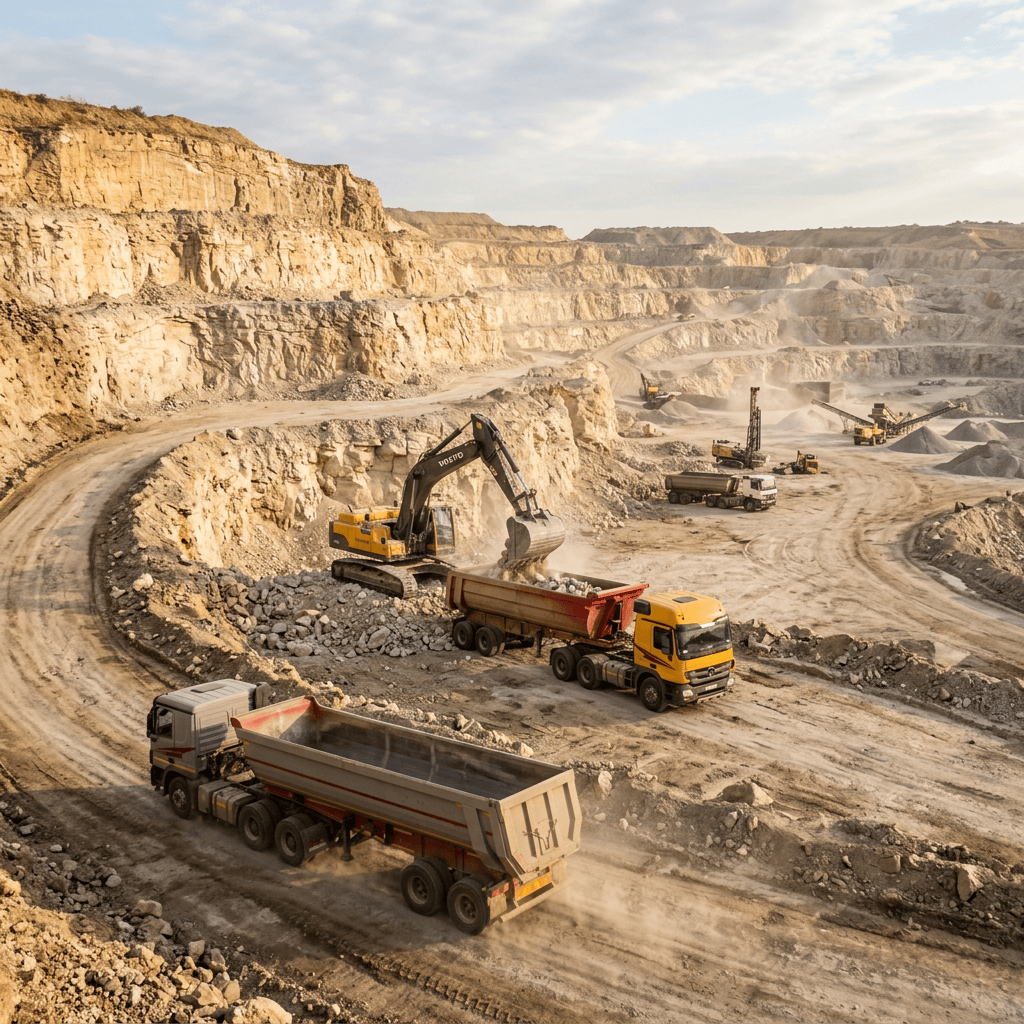
Limestone in South Africa is moved by road mainly in tipper and side-tipper trucks for crushed stone, and in tautliners or bulk pneumatic tankers for bagged or fine products. Its biggest customers are cement producers and farmers who use agricultural lime to correct acid soils. Transport cost is driven by distance, payload, loading and offloading conditions, product type and compliance with load limits, and the best results come from matching the vehicle to the product and the site.
Limestone is a low-value, high-volume commodity, which means transport is often a significant part of the delivered cost. Getting the logistics right, meaning the correct truck, a full legal payload and a smooth loading and offloading process, is what keeps the price competitive.
Where limestone is used
Cement and construction. Limestone is the main raw material for cement and is also used in concrete, road building and asphalt. Cement plants consume large volumes, which are usually moved from quarries by tipper or conveyor and then, after processing, by bulk cement tanker or bagged on pallets.
Agriculture. Agricultural lime, made from crushed limestone or dolomitic limestone, neutralises acidic soil, improves nutrient availability and supports crop yields. Farmers typically buy it in bulk and spread it before planting.
Industry. Limestone and lime products also serve steelmaking, glass, sugar processing, water treatment, mining and chemical industries, and some of these use processed products such as quicklime or hydrated lime.
Product forms and how they travel
The way limestone is moved depends on how it is presented.
- Crushed and screened limestone (aggregate). Carried in tipper trucks, side tippers or interlinks with tipper bodies. This is the most common form for construction and agricultural use.
- Agricultural lime (fine powder or granular). Usually delivered in bulk tippers or tautliners, either loose or in bags. Fine lime can be dusty, so covered loads matter.
- Bagged lime. Carried in tautliners or curtain-siders on pallets, protected from moisture.
- Ground limestone and cement powders. Moved in pneumatic bulk tankers, which keep the product dry and allow pressurised offloading.
- Quicklime and hydrated lime. Chemically active products that need appropriate handling, and in some cases suitable equipment and driver awareness, because they can irritate skin and eyes and react with moisture.
Always confirm the exact product with the supplier, because the correct vehicle and handling differ significantly.
Choosing the right truck
- Side tippers and interlinks. Popular for bulk aggregate over medium and long distances because they offer high payloads and quick offloading.
- End tippers. Suitable for shorter hauls and sites with limited space.
- Rigid tippers. Good for farm deliveries and smaller construction jobs.
- Tautliners. Suited to bagged and palletised lime, offering protection from weather.
- Bulk pneumatic tankers. Used for dry powders such as cement and fine lime, offloaded through pipes and silos.
Payload depends on the vehicle, and heavy combinations can carry a large amount per trip, so maximising a legal payload is one of the best ways to reduce the cost per ton. Never load beyond the legal limits, since overloading is an offence, damages roads and can void insurance.
What drives the cost of limestone transport
- Distance. Since limestone is cheap per ton, haulage costs can quickly outweigh the material cost on long routes.
- Payload. A full legal payload on every trip lowers the cost per ton.
- Loading and offloading. Slow loading, queues at the quarry and difficult offloading sites add hours and cost.
- Return loads. An empty return leg is priced into the trip, and a backload can bring the rate down.
- Tolls and road conditions. Heavy vehicles pay significant tolls, and poor roads increase wear and reduce speed.
- Fuel. Diesel is typically the largest variable cost for a long haul.
- Seasonal demand. Agricultural lime is often ordered before planting, and construction demand follows the building cycle.
- Compliance. Weighbridge checks, permits and safety requirements at mines and quarries add time.
Compliance and site rules
Weighbridges. Loads are commonly weighed at the quarry, and again at the plant or on the road. Accurate weight tickets protect both the buyer and the transporter.
Mine and quarry access. Sites often require inductions, personal protective equipment, approved vehicles and compliance with site safety rules. Confirm these before sending a truck.
Covered loads. Fine or dusty loads should be covered to prevent spillage and to protect other road users.
Driver and vehicle requirements. Heavy combinations require the correct licence code and professional driving permit.
Environmental care. Spills and dust need managing, particularly near farms, watercourses and residential areas.
Agricultural lime logistics: what farmers should plan for
Farmers commonly order lime in tons per hectare, based on soil test results, and the total volume can be large. To avoid delays and extra costs:
- Order early, before the planting season, when demand and trucks are tight.
- Check access, including farm roads, gates, bridges and turning space.
- Agree the delivery point, whether at the farm gate, the field edge or a stockpile.
- Confirm the spreading arrangement, since some suppliers deliver only and others include spreading.
- Ask about weather, because wet conditions can make farm roads impassable and delay delivery.
- Get weight tickets for each load so the delivered quantity matches the invoice.
Agricultural regions such as Limpopo have their own seasonal patterns, which our guide to truck rental in Polokwane explains from a transport supply point of view.
Cement logistics: what buyers should plan for
For cement producers and their customers, reliability matters as much as price. Plants and construction sites work to tight schedules, so late trucks can stop production or a concrete pour. Consider longer-term contracts, backup vehicles and scheduled delivery windows. Bulk cement tankers need clean, dry tanks and trained drivers, and the quality of the product depends on it staying dry and uncontaminated.
Related aggregate movements
Limestone often moves alongside other construction materials, and the same trucks are used for both. If you are planning aggregate deliveries, our guide to crusher run and aggregate transport for construction sites explains how ordering, tonnage and site access work. For the general vehicle categories available for hire, see the truck rental page.
Frequently asked questions
What truck is best for transporting limestone?
Side tippers and tipper trucks are common for crushed limestone, while tautliners suit bagged lime and bulk tankers suit fine powders.
How much limestone can a truck carry?
It depends on the vehicle and its legal payload. Heavy combinations carry far more than rigid tippers, but always stay within legal limits.
Is agricultural lime transported differently from cement?
Yes. Agricultural lime often travels in tippers or tautliners, while cement is usually moved in bulk pneumatic tankers or bags.
What affects the price most?
Distance, payload, loading and offloading time and return loads.
When should farmers order lime?
Ahead of planting, ideally well before the rush, so transport and spreading can be scheduled.


Leave a comment