
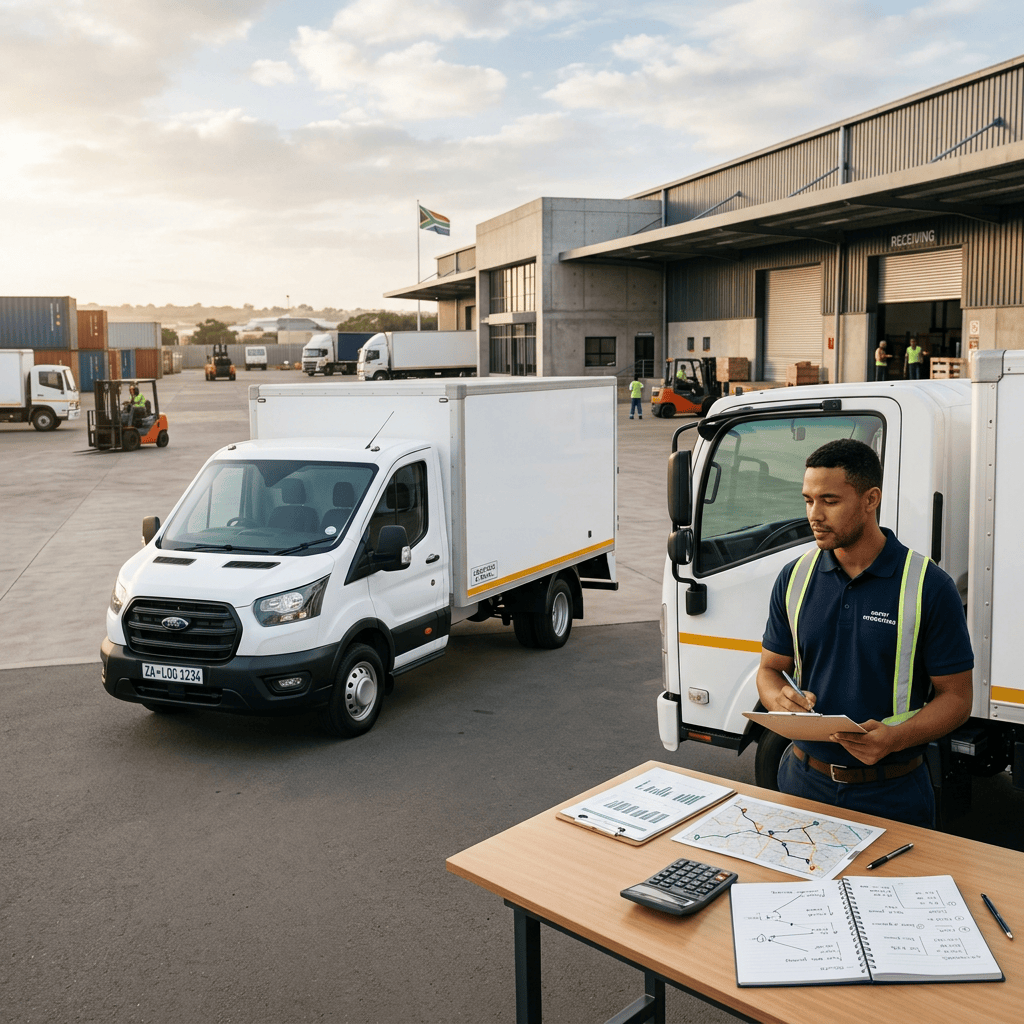
Light pickup-type vehicles typically show daily rates of roughly R500 to R1,600 on rental comparison sites, depending on the city, dates and vehicle. Larger panel vans and one-to-eight-ton trucks are usually priced per quote, and the final cost depends on the kilometres you drive, fuel, insurance, deposit, delivery and whether you need a driver. A cheap daily rate can end up costing much more once these are added, so compare the total for your actual job.
Anyone hiring a truck for the first time is usually surprised by how many moving parts the price has. The daily rate is the starting point, not the end. This guide explains what to expect and how to work out the true cost before you sign.
Why there is no single price
Truck hire in South Africa covers everything from a half-ton bakkie to a 26-ton truck tractor. Price depends on the vehicle size, the supplier, the season, the distance and the terms of the hire. Published aggregator prices for light vehicles vary widely from city to city and change with the season, and heavier trucks are rarely advertised with a fixed price because the job itself is so variable.
Rental comparison sites give a rough idea for bakkies. Listings we reviewed showed pickup-type vehicles averaging around R1,000 to R1,600 per day in major cities, with cheaper deals appearing at quieter times. Treat those as a guide only, because dates, availability and conditions change constantly.
The main components of a truck hire quote
1. The base rate. This is the daily, weekly or monthly rental of the vehicle. Longer hires often carry a lower daily rate.
2. Kilometres. Some quotes include a kilometre allowance and charge extra beyond it. Others charge per kilometre from the first kilometre. A day rate with a tight allowance can be more expensive than a higher rate with unlimited kilometres, especially for a long trip.
3. Fuel. Most rentals are full-to-full, meaning you return the truck with a full tank, or the supplier charges for refuelling. Diesel is a major cost on heavier trucks, so estimate your trip’s fuel use in advance.
4. Insurance and excess. Basic cover is often included, but the excess, the amount you pay if the vehicle is damaged, can be high. Some suppliers offer excess reduction for an extra daily fee. Ask specifically about tyres, glass and undercarriage damage.
5. Deposit. Expect to pay a refundable deposit, which can be substantial for larger vehicles. Confirm how and when it is refunded.
6. Driver charges. If you hire with a driver, expect a driver fee and possible overtime, subsistence or overnight costs on longer trips.
7. Delivery and collection. Having the truck delivered to you, or collected from a remote site, usually attracts a fee.
8. Tolls. Tolls are significant on major routes, especially for heavier vehicles. Ask whether they are your cost or included.
9. Extras. Trolleys, straps, tail-lifts, moving blankets and loading equipment may cost extra.
A simple way to compare quotes
Ask each supplier for the same job and put the numbers side by side. Use a small table with these lines:
- Base rate for your hire period.
- Kilometre charges for your expected distance.
- Fuel estimate.
- Insurance or excess-reduction cost.
- Driver cost, if applicable.
- Delivery and collection.
- Tolls.
- Extras and deposit.
Add them up. The cheapest advertised day rate is often not the cheapest total.
What pushes the price up
- Peak periods. Month-end, the festive season and the start and end of school and university terms are busy times for moves.
- Short notice. Last-minute bookings limit choice and reduce the chance of a good rate.
- One-way hires. Dropping the truck in a different city usually attracts a fee, because the supplier has to reposition the vehicle.
- Specialised vehicles. Refrigerated bodies, tail-lifts and tipper trucks cost more than plain drop-sides or enclosed bodies. Our guide to reefer truck hire explains why refrigerated vehicles are priced higher.
- Driver inclusion. A driver adds cost but may reduce risk.
- Long distance. More kilometres mean more fuel, more tolls and more wear.
How to keep the cost down
- Book early, especially for peak periods.
- Choose the right size. An oversized truck costs more to hire and fuel, and an undersized one forces a second trip.
- Plan the route to avoid unnecessary kilometres.
- Be ready to load quickly. Waiting time can cost money if a driver is involved.
- Ask about weekday or off-peak rates, which can be lower than weekends.
- Return the truck on time and clean, with a full tank, to avoid penalties.
- Photograph the truck before and after, so any damage dispute is easier to settle.
Do you need a special licence?
Many rental trucks weigh more than 3,500 kg GVM, and you need the right licence code to drive them. A light panel van may need only a standard licence, while an eight-ton truck usually requires at least a C1. Our guide to Code 14 licence requirements explains the licence codes, and it also explains when hiring with a driver is the simpler option.
Regional differences
Prices and availability vary by region, with large cities generally offering more choice and competition. Large port cities such as Durban usually offer more choice and competition, and you can review the general vehicle categories on the truck rental page.
Frequently asked questions
How much does it cost to hire a bakkie for a day?
Rental comparison listings typically show roughly R500 to R1,600 per day depending on the city and dates, before fuel, insurance and extras.
Is fuel included in truck hire?
Usually not. Most suppliers use a full-to-full policy.
Do I need to pay a deposit?
Usually yes, and it is refundable if the vehicle is returned in good condition.
Is it cheaper to hire by the week?
Often the daily rate falls with longer hires, but compare the total for your actual needs.
Is it cheaper to hire a truck with a driver?
Not usually on price alone, but a driver can remove licence, insurance and safety concerns.


Leave a comment