
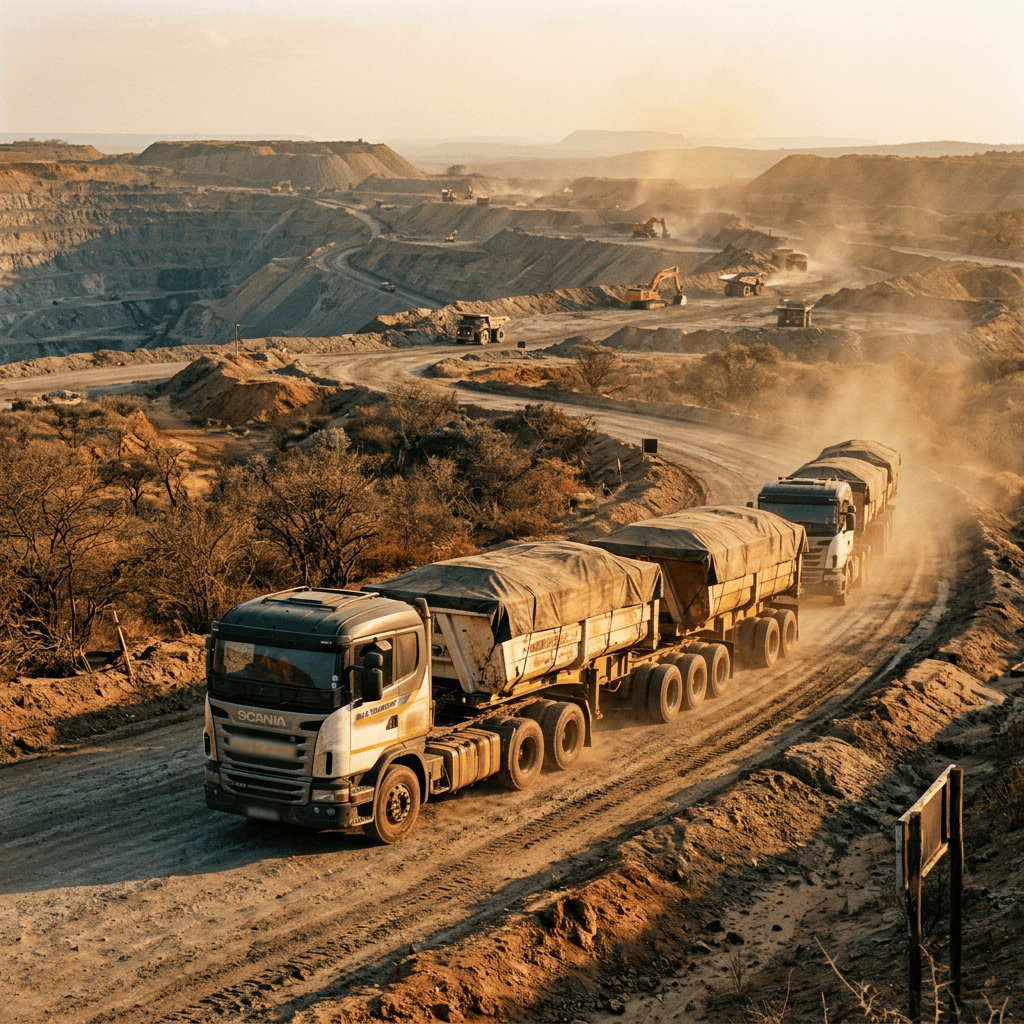
Copper ore and copper concentrate in South Africa are moved by road mainly in tipper trucks, side tippers and covered or sealed vehicles, depending on whether the product is raw ore, crushed ore or concentrate. Costs and risks are driven by distance, load control, weighing and sampling, security, and site compliance at mines and processing plants. Because copper is valuable, theft prevention and a clear chain of custody are as important as the truck itself.
Copper is central to electrical infrastructure, construction and the energy transition, and moving it from mine to processor or port is a specialised logistics task. This overview explains the main forms of copper product, how they travel and what to look for when planning or buying transport.
The forms copper travels in
Copper is rarely moved as a single product, and the form defines the transport method.
- Run-of-mine or crushed ore. Rock taken from the mine, sometimes crushed, carrying a modest percentage of copper. It is usually bulky, heavy and moved over shorter distances to a nearby concentrator or processor.
- Copper concentrate. Ore that has been milled and processed to increase the copper content. It is much more valuable per ton, often a fine, damp material that needs careful handling.
- Copper cathode and refined products. Refined plates or bars, transported on flatbeds or in containers, usually under tight security because of their high value.
- Scrap copper. A separate flow, often in smaller quantities and with its own security and licensing concerns.
This article focuses on ore and concentrate, which make up most of the bulk mining transport.
Where copper moves in and around South Africa
South Africa’s copper mining is concentrated in a few areas, notably the Phalaborwa region in Limpopo and parts of the Northern Cape, where several operations and projects are located. Ore is generally transported from the mine to a nearby concentrator or processing plant, and concentrate is then carried to smelters, ports or export points.
South Africa also plays a significant role as a corridor for copper from neighbouring countries. Copper produced in central southern Africa, including Zambia and the Democratic Republic of Congo, is often trucked southwards across borders to ports for export, and some flows go through South African road networks. That makes cross-border compliance an important part of the logistics. Our regional guides to truck rental in Polokwane and truck rental in Rustenburg explain how mining regions shape local transport supply.
Vehicle types
- Side tippers and interlinks. High payload, quick offloading and widely used for ore and some concentrate, provided the load is properly covered.
- End tippers. Suited to shorter mine-to-plant hauls and sites with limited space.
- Rigid tippers. Used for shorter distances and smaller quantities.
- Tautliners and covered bulk trailers. Provide protection and security for concentrate, particularly when weather and theft are concerns.
- Containers on flatbeds. Used where concentrate is containerised for export, sealed at the mine or a nearby facility.
- Security-escorted vehicles. High-value loads such as cathode may travel with escorts or tracking.
The right choice depends on the product, the moisture content, the distance and the destination. Concentrate is usually damp and can behave like a liquid if it becomes too wet, so vehicles and loading practices need to account for that.
Key logistics considerations
Weighing and sampling. Payment for ore and concentrate is often based on weight and on assays, meaning tests of the copper content. Weighbridge accuracy, sampling practice and documentation are critical, and disputes are common if they are unclear. Make sure the process is agreed in advance.
Chain of custody. Because copper is valuable, every hand-off from mine to processor to port should be documented. Sealed vehicles, seal numbers, tracking and signed delivery records help prevent losses and disputes.
Security. Copper theft is a serious problem in southern Africa. Consider vehicle tracking, driver vetting, approved routes, secure overnight parking and, for high-value loads, escorts.
Moisture and product loss. Wet concentrate can leak and lose value, and dry fine material can blow away. Covering loads and using suitable vehicle bodies protects both the product and the environment.
Mine and plant access rules. Sites usually require inductions, personal protective equipment, approved vehicles and compliance with safety procedures. Delays at gates and weighbridges are a major driver of cost, so build them into the schedule.
Product classification. Some concentrates may have hazardous properties, and handling requirements depend on the product and the consignor’s classification. Confirm the classification and any special requirements with the consignor before the first load.
What affects the cost
- Distance and route. Long hauls, tolls and difficult roads raise the cost per ton.
- Payload. Carrying full legal loads is essential to keep costs down, while overloading brings fines, road damage and insurance problems.
- Product type. Concentrate often needs covered or sealed vehicles, and cathode needs security, so these cost more than open-body ore transport.
- Turnaround time. Queues at mines, plants and ports keep trucks idle and increase the price.
- Security and tracking. Escorts, tracking and insurance all add to the cost.
- Cross-border requirements. Permits, customs paperwork and border delays add time and expense.
- Return loads. Empty return legs are usually priced into the trip.
- Fuel. Diesel is a large share of the total cost on long routes.
Compliance, insurance and drivers
Operators moving mineral products should be able to show valid operating permits, insurance that covers the product’s value and drivers holding the correct licence codes and professional driving permits. Drivers of heavy combinations need the correct EC licence code. For cross-border work, check permit and customs requirements in every country on the route and make sure the driver and vehicle documents are in order. For mining projects that also need general-purpose trucks, see the truck rental page.
Questions to ask a transporter
- Have you moved copper ore or concentrate before, and for whom?
- What vehicle types will you use, and are loads covered or sealed?
- How is weighing done, and who keeps the records?
- What security and tracking measures are in place?
- What insurance covers the value of the load?
- How do you handle delays at mines, plants and borders?
- Can you provide references from mining clients?
Frequently asked questions
How is copper ore transported in South Africa?
Mainly by road in tipper trucks and side tippers, with concentrate often carried in covered or sealed vehicles.
What is the difference between ore and concentrate transport?
Ore is bulky and lower in value, while concentrate is more valuable and needs more careful handling, covering and security.
Why is security so important?
Copper is valuable and a frequent target for theft, so tracking, sealed loads and approved routes are standard precautions.
What affects the cost per ton?
Distance, payload, product type, turnaround time, security and cross-border requirements.
Do drivers need special licences?
Heavy combinations generally require the correct heavy-vehicle licence and a professional driving permit.


Leave a comment