
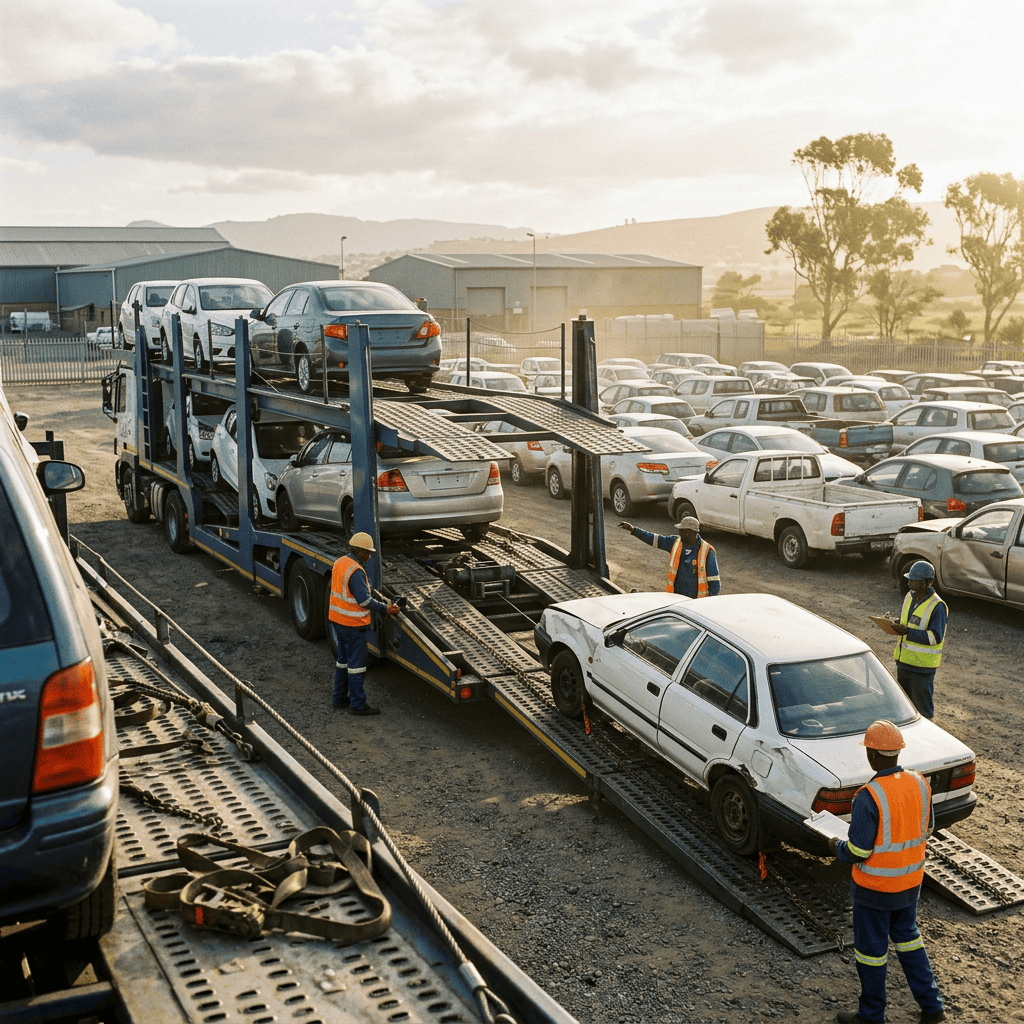
Car carrier transport for vehicle auctions is the service of collecting vehicles from an auction yard after a sale and delivering them to the buyer. It matters more than most buyers expect. Auction vehicles usually have to be collected within a short window, they are often at yards far from the buyer, and some do not run at all. Planning transport before bidding protects the margin on the purchase.
Why Auction Buyers Need Dedicated Transport
Vehicle auctions in South Africa take place at physical yards and online, and lots come from bank repossessions, insurance salvage, fleet disposals, dealer trade-ins and government or municipal sales. A buyer in Cape Town can win a lot in Gauteng. Once the hammer falls the clock starts: auction houses generally allow a limited number of days for collection before storage fees apply, although terms vary, so the conditions of sale should always be checked.
What Types of Vehicles Come from Auctions?
- Runners: vehicles that start and drive, and can be loaded like any other car.
- Non-runners: vehicles that need a winch and a rollback or a carrier with winching capability.
- Accident-damaged and salvage vehicles: these may have damaged suspension, steering or wheels, which makes loading harder and calls for recovery-type equipment.
- Fleet and bulk lots: several similar vehicles from one seller, which suit multi-car loading well.
Telling the transporter the true condition of each vehicle matters, because it determines the equipment used and the price quoted.
What You Need to Collect an Auction Vehicle
Requirements differ between auction houses, but the following are typical:
- proof of purchase and proof of full payment
- the release or collection note (often called a gate pass) issued by the auction house
- the transporter’s details and a signed authority letter from the buyer
- the buyer’s ID or company documents
- vehicle details: VIN, lot number, yard location and yard contact hours
Confirm with the auction house whether a third party may collect on the buyer’s behalf. Many require a written authority. The general workflow for collection and delivery is described in this guide to vehicle delivery services in South Africa.
Single-Car or Multi-Car: Matching the Carrier to the Purchase
One non-runner from one yard is a job for a rollback. Several vehicles from the same yard, or from yards along the same route, are cheaper per unit on a multi-car carrier. Dealers who buy multiple lots can often have loads consolidated so one truck serves several purchases. This look at how car carrier transport works for dealerships explains the process.
What Affects the Cost of Auction Vehicle Transport?
- Distance: the biggest single factor, including tolls and fuel.
- Number of vehicles: more vehicles on one trip lowers the cost per vehicle.
- Vehicle condition: winching and non-standard loading add time and cost.
- Yard access: tight yards, restricted gate hours and limited loading space can slow collection.
- Urgency: short collection deadlines limit scheduling options.
A low hammer price can hide expensive transport. Building a transport quote into the maximum bid gives a more honest picture of what the vehicle really costs.
A Practical Auction Transport Checklist
- Before bidding: get an indicative transport quote for the lot’s location.
- After winning: request the release documentation and confirm the collection deadline.
- Book early: confirm the date, the number of vehicles and their condition with the carrier.
- On collection day: inspect and photograph the vehicle at the yard and make sure the driver signs the collection note.
- In transit: confirm the vehicle is covered by goods-in-transit insurance and that tracking is available.
- On delivery: check the vehicle against the photos and note any concerns on the delivery note before signing.
Securing practice is a topic of its own, and this guide to securing goods in transit covers the principles that apply.
Salvage and Write-Off Considerations
Vehicles damaged in accidents may be classified as salvage or write-offs after an insurance assessment, which affects whether and how they can be registered and driven again. A vehicle does not need to be roadworthy to travel on a carrier, and loading it is safer and lawful than driving it away from the yard. Buyers should confirm the vehicle’s status and check the current requirements with the relevant authorities before assuming it can be returned to the road.
Buying at Online Auctions from Another Province
Online auctions make it easy to bid on vehicles hundreds of kilometres away, but the buyer rarely sees the vehicle in person. Photos can hide underbody damage, flat batteries or seized components, and any of these can turn a simple collection into a recovery job. Before bidding, check the lot description for whether the vehicle starts and drives, confirm the yard’s exact location and opening hours, and ask the transporter what the trip would cost. Having the carrier photograph the vehicle at collection also gives the buyer an independent record of its condition before it leaves the yard.
Frequently Asked Questions
How soon after an auction must I collect the vehicle?
It depends on the auction house. A few working days is common before storage fees start, so check the conditions of sale and book transport straight away.
Can a non-running car be transported from an auction?
Yes. Non-runners are winched onto a rollback or a carrier equipped for it. Tell the operator the vehicle’s condition when booking.
Can someone else collect an auction vehicle for me?
Usually, with a signed authority letter and the release documents. Requirements vary, so confirm with the auction house first.
Is a multi-car carrier cheaper for auction purchases?
Yes, when several vehicles are on the same route. The trip cost is shared, so the cost per vehicle drops.


Leave a comment