
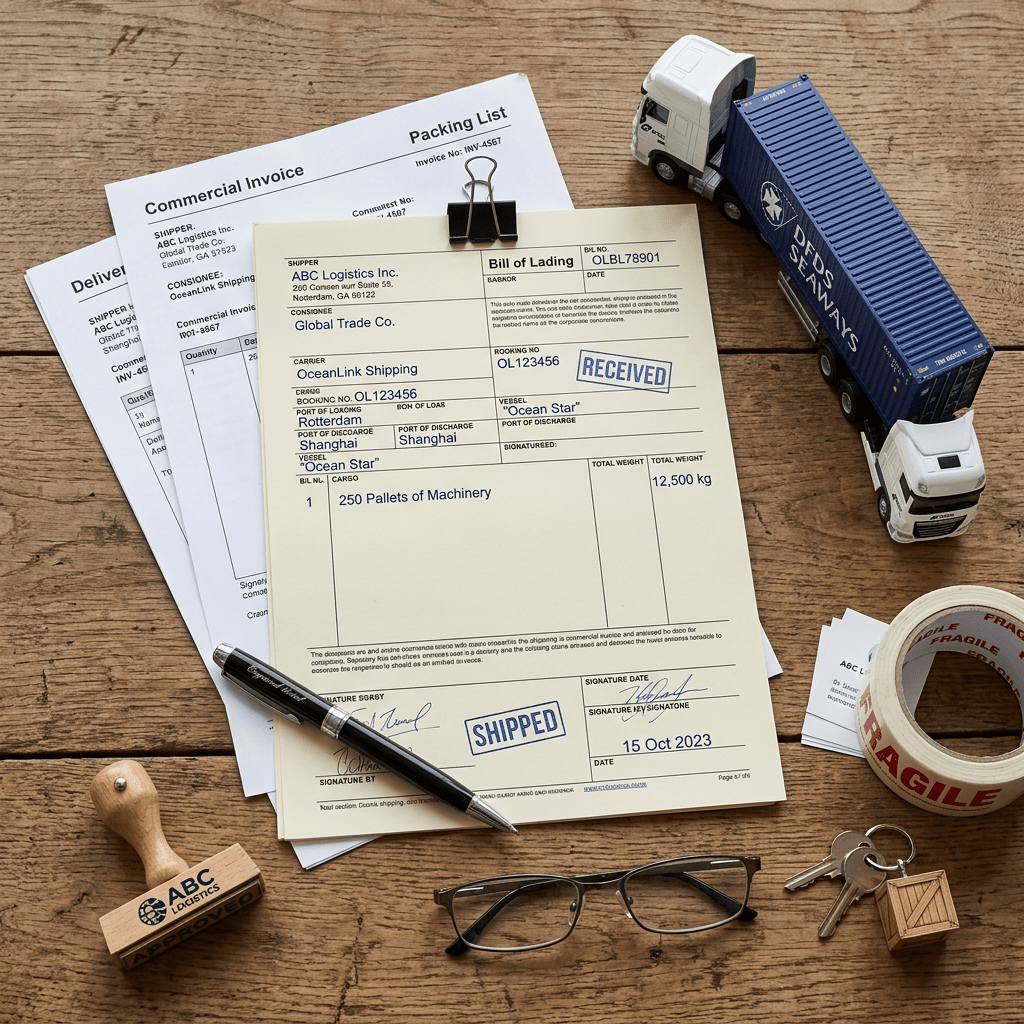
Cross-border freight in South Africa is tightly regulated to ensure legal compliance, cargo safety, tax enforcement, and smooth movement of goods across borders. Whether you are transporting goods into Zimbabwe, Mozambique, or other SADC countries, having the correct documentation is essential to avoid delays, fines, or cargo being held at the border.
This guide breaks down the key documents required for cross-border freight and explains how each one is used in logistics operations.
Why Cross Border Documentation Matters
Cross-border logistics involves customs clearance, border inspections, and compliance with international trade regulations. Without proper documentation, freight can be:
- Delayed at border posts
- Fined or penalised
- Refused entry
- Returned to origin
- Held indefinitely by customs
Efficient documentation ensures smooth movement through major trade corridors like:
- Beitbridge Border Post
- Lebombo Border Post
- Oshoek Border Post
1. Commercial Invoice
The commercial invoice is one of the most important cross-border documents.
It includes:
- Buyer and seller details
- Description of goods
- Quantity and value
- Currency used
- Payment terms
Customs authorities use this document to determine duties and taxes.
2. Packing List
The packing list provides a detailed breakdown of cargo inside the shipment.
It includes:
- Number of packages
- Weight per item
- Dimensions
- Type of packaging
This helps customs officials verify cargo contents quickly.
3. Bill of Lading (BOL)
The Bill of Lading is a legal transport document issued by the carrier.
It serves as:
- Proof of shipment
- Contract of carriage
- Receipt of goods
For road freight, it is sometimes called a “Waybill.”
4. Customs Declaration Form
This is required for all international freight movements.
It declares:
- Nature of goods
- Value of cargo
- Origin and destination
- HS tariff codes
This document determines import/export duties and clearance eligibility.
5. Import and Export Permits
Certain goods require permits depending on regulations.
Examples include:
- Chemicals
- Food products
- Agricultural goods
- Controlled industrial materials
- Mining commodities
Permits ensure compliance with trade regulations between countries.
6. SARS Customs Documentation
In South Africa, the South African Revenue Service (SARS) requires specific customs declarations for cross-border freight.
These may include:
- SAD 500 form (import/export declaration)
- Customs release documents
- Tax clearance confirmations
7. Certificate of Origin
This document confirms where the goods were manufactured or produced.
It is important because:
- It determines tariff rates
- It supports trade agreements
- It prevents fraud or misclassification
8. Transport Permit (Cross Border Permit)
The transport permit authorizes the vehicle and operator to move goods across borders.
It includes:
- Vehicle registration details
- Operator license
- Route authorization
- Border crossing approval
Without this, trucks may be denied entry.
9. Driver Documentation
Drivers must carry:
- Valid driver’s license (relevant heavy vehicle code)
- Passport
- Professional driving permit (PrDP)
- Employment authorization documents
10. Vehicle Documentation
Each truck must have:
- Vehicle registration papers
- Roadworthy certificate
- Insurance documents
- Cross-border insurance (COMESA Yellow Card where applicable)
11. Insurance Certificate
Cross-border freight insurance covers:
- Cargo damage
- Theft
- Accidents
- Transit risks
Many logistics companies require proof of insurance before dispatch.
12. Customs Clearing Agent Documents
Many businesses use clearing agents to handle border processing.
These may include:
- Power of attorney
- Agency agreements
- Customs clearance instructions
Common Border Posts Where Documents Are Required
Cross-border freight documentation is commonly processed at:
- Beitbridge (South Africa–Zimbabwe)
- Lebombo (South Africa–Mozambique)
- Groblersbrug (South Africa–Botswana)
- Maseru Bridge (South Africa–Lesotho)
Challenges in Cross Border Documentation
Missing or Incorrect Paperwork
This is the most common cause of delays.
Incorrect HS Codes
Wrong classification can result in:
- Penalties
- Higher duties
- Customs holds
Delayed Clearance
Border congestion can increase processing time even with correct documents.
Language and Regulatory Differences
Different countries may have additional requirements or formats.
How to Avoid Cross Border Freight Delays
To ensure smooth logistics operations:
- Prepare documents in advance
- Use experienced clearing agents
- Work with professional logistics companies
- Double-check HS codes and cargo descriptions
- Ensure all permits are valid
- Use GPS tracking and digital dispatch systems
Logistics Support for Cross Border Freight
Many transport companies assist businesses with documentation and freight coordination, including dispatch and customs preparation.
One example is:
FLCC Solutions — providing logistics coordination, transport support, dispatch management, and freight administration services across South Africa and regional cross-border routes.
Conclusion
Cross-border freight requires strict documentation to ensure legal compliance and smooth cargo movement between countries. From commercial invoices and customs declarations to permits and insurance, every document plays a critical role in avoiding delays and ensuring efficient logistics operations.
Businesses that prepare documentation correctly—and work with experienced logistics providers—can significantly reduce border delays and improve supply chain performance across Southern Africa.


Leave a Reply