
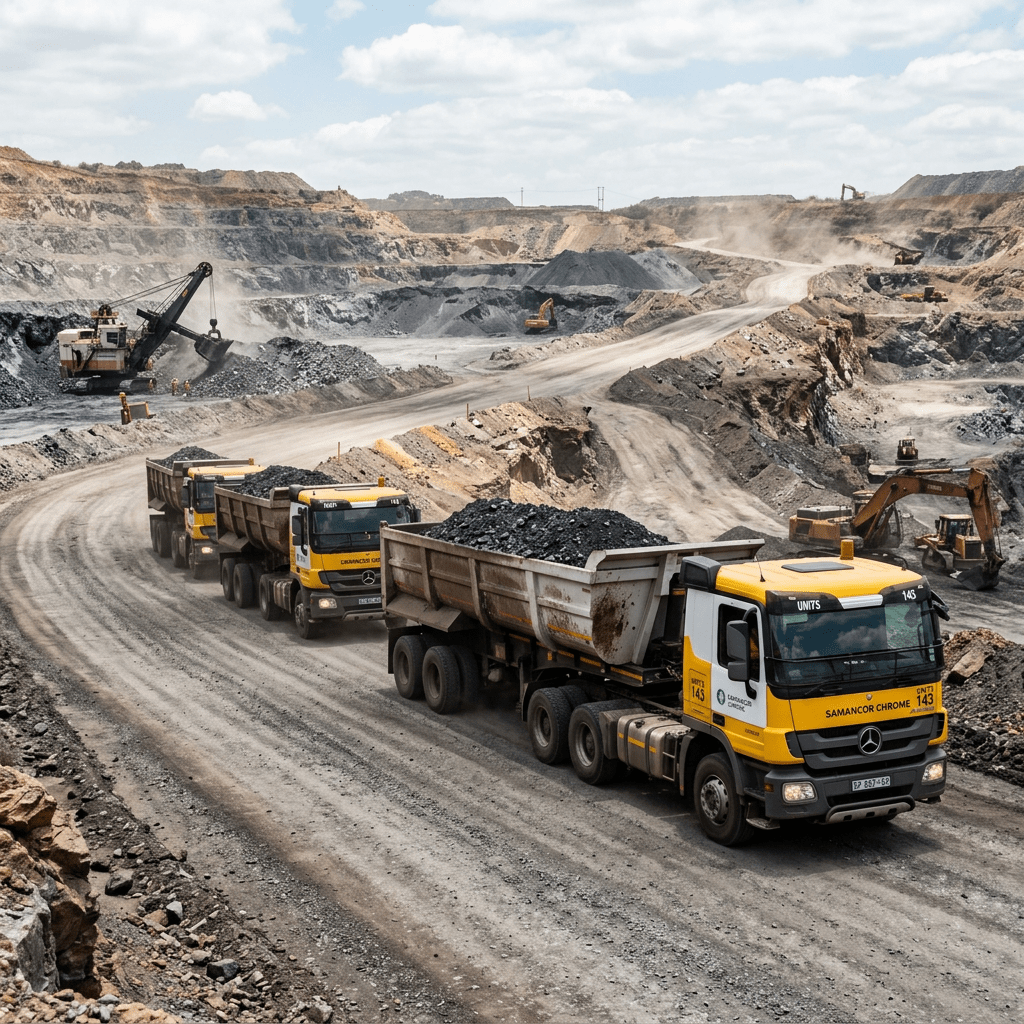
Chrome ore transport is a backbone of the mining and export economy in South Africa, especially in regions like Mpumalanga, Limpopo, and North West. As global demand for ferrochrome and stainless steel continues rising, logistics efficiency has become a key competitive advantage for mining companies.
In 2026, the debate around road vs rail transport for chrome ore is more relevant than ever—especially as infrastructure pressure, fuel costs, and export demand continue to increase.
What Is Chrome Ore Transport?
Chrome ore transport refers to the movement of raw chromium-rich mineral (chromite) from mining sites to:
- Processing plants
- Smelters
- Export terminals (ports or rail hubs)
- Industrial stockpiles
It is typically moved in bulk using:
- Side tipper trucks
- Superlink trailers
- Rail wagons (bulk freight trains)
Because chrome ore is heavy and high-volume, logistics decisions directly impact profitability.
Chrome Ore Transport Methods in South Africa
Road Transport (Truck-Based Logistics)
Road transport uses heavy-duty trucks such as side tippers and superlinks to move chrome ore from mines to smelters or rail depots.
Advantages of Road Transport
1. Flexibility
- Direct mine-to-site delivery
- No dependency on rail schedules
- Works in remote mining areas
2. Faster Short-Distance Delivery
- Ideal for 50–300 km routes
- Reduces handling stages
3. Scalable Operations
- Easy to increase truck fleet during peak demand
- Contract-based trucking available
4. Accessibility
- Reaches mines without rail infrastructure
Disadvantages of Road Transport
- High fuel costs
- Road congestion (especially mining corridors)
- Increased vehicle maintenance
- Higher accident risk on heavy haul routes
- Environmental impact (carbon emissions)
Rail Transport (Bulk Freight Rail)
Rail transport is operated mainly through national freight infrastructure managed by Transnet Freight Rail.
Advantages of Rail Transport
1. Cost Efficiency for Long Distances
- Lower cost per ton over long haul routes
- Ideal for export logistics
2. High Volume Capacity
- Can move thousands of tons per trip
- Reduces congestion on roads
3. Fuel Efficiency
- Lower emissions per ton transported
- More sustainable for bulk cargo
4. Safer for Heavy Commodities
- Reduced road accident risk
- Stable controlled transport environment
Disadvantages of Rail Transport
- Limited rail infrastructure near mines
- Delays due to network congestion
- Less flexible scheduling
- High dependency on port and rail availability
- Additional trucking needed for last-mile delivery
Road vs Rail Comparison for Chrome Ore (2026)
| Factor | Road Transport | Rail Transport |
|---|---|---|
| Cost per ton | Higher | Lower |
| Speed (short distance) | Faster | Slower setup |
| Speed (long distance) | Moderate | Efficient |
| Flexibility | Very high | Low |
| Volume capacity | Medium | Very high |
| Infrastructure dependency | Low | High |
| Environmental impact | Higher emissions | Lower emissions |
Which Is Better for Chrome Ore Transport?
Road Transport is Best When:
- Mines are far from rail lines
- Urgent deliveries are required
- Short-to-medium haul routes are used
- Flexible dispatching is needed
Rail Transport is Best When:
- Large export volumes are moved
- Long-distance inland transport is required
- Cost efficiency is a priority
- Stable supply contracts exist
Hybrid Transport Model (Most Common in 2026)
In 2026, most mining companies use a hybrid logistics system:
- Trucks collect chrome ore from mines
- Transport to rail siding or depot
- Rail moves bulk cargo to port/export terminal
This system combines:
- Truck flexibility
- Rail efficiency
It is widely used across chrome belts in Limpopo and North West.
Key Chrome Ore Transport Routes in South Africa
Major logistics corridors include:
- Rustenburg → Durban Port
- Steelpoort → Richards Bay
- Thabazimbi → Maputo Corridor
- Lydenburg → Gauteng processing hubs
- North West mining belt → rail sidings
These routes are critical for both domestic processing and export logistics.
Top Logistics Companies Supporting Chrome Ore Transport
1. Unitrans
Specialises in mining logistics, bulk haulage, and large-scale contract trucking.
2. BHL Group
Provides industrial freight and heavy haul transport services across Southern Africa.
3. Value Logistics
Supports large-scale distribution and bulk freight operations.
4. Cargo Carriers
Offers long-distance and industrial freight solutions for mining commodities.
5. KDG Logistics
Focuses on freight coordination and transport management for industrial clients.
6. FLCC Solutions
FLCC Solutions provides logistics coordination, dispatch support, fleet administration, and freight management services that support mining transport operations.
Services include:
- Bulk transport coordination
- Truck dispatch management
- Fleet logistics support
- Long-distance freight planning
- Supply chain coordination
Mining companies often use logistics partners like this to improve efficiency between road and rail systems.
7. Transnet Freight Rail
Handles bulk rail transport for heavy commodities including chrome ore.
Key Challenges in Chrome Ore Transport
1. Infrastructure Constraints
- Limited rail access near mines
- Road wear from heavy trucks
2. Rising Fuel Costs
- Road transport profitability is sensitive to diesel prices
3. Port Congestion
- Export delays at Durban and Richards Bay
4. Equipment Availability
- Shortage of side tippers and rail wagons during peak demand
Future of Chrome Ore Transport in South Africa (2026 and Beyond)
The industry is shifting toward:
- Rail expansion projects
- Digital freight tracking systems
- Fleet optimization software
- Hybrid logistics models
- Green logistics (reduced emissions transport)
Mining companies are increasingly prioritising cost-efficient and sustainable transport systems.
Conclusion
Chrome ore transport in South Africa relies on both road and rail systems, each offering unique advantages depending on distance, volume, and infrastructure availability.
- Road transport provides flexibility and accessibility
- Rail transport offers cost efficiency and high-volume capacity
- Hybrid systems dominate modern mining logistics in 2026


Leave a Reply