
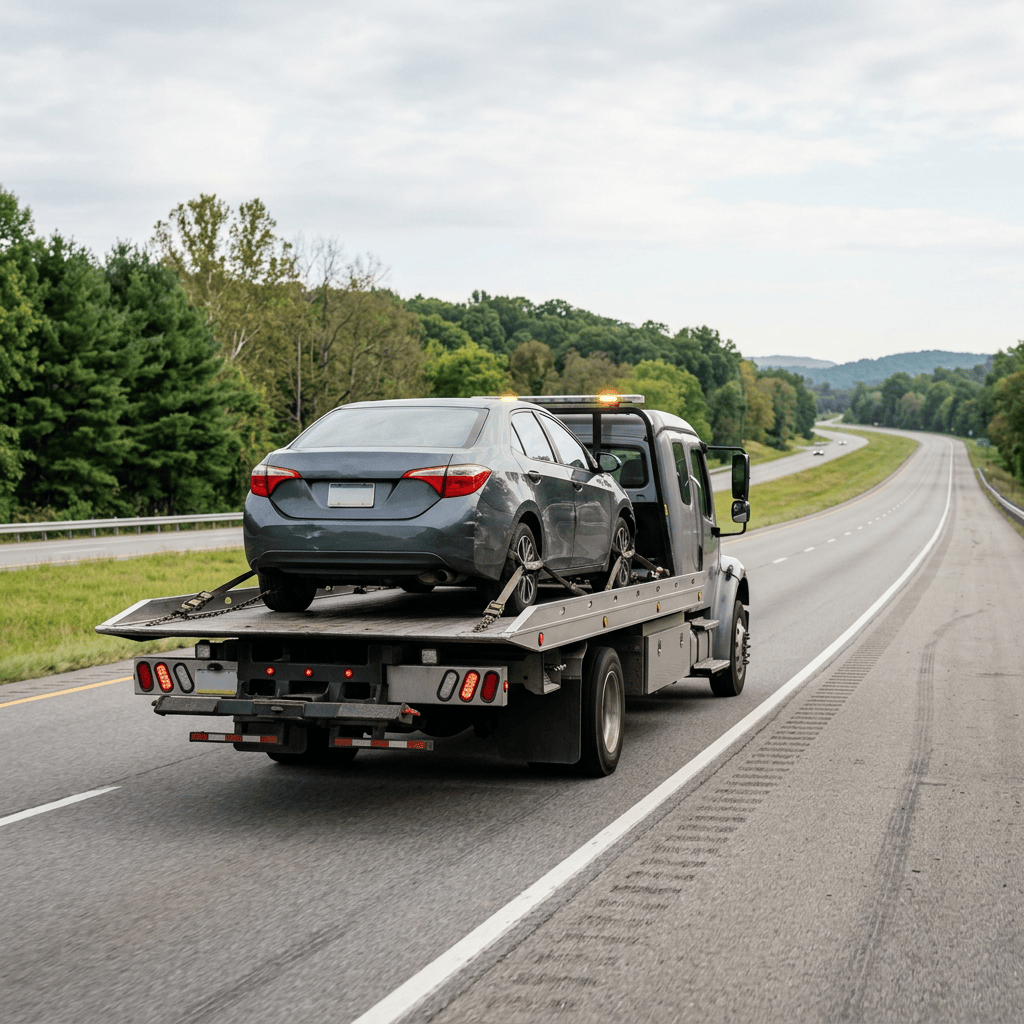
A rollback truck is a tow truck with a flat deck that tilts and slides back to the ground, creating a ramp so a vehicle can be driven or winched on board. All wheels end up off the road, which makes it the safest option for non-runners, accident-damaged, low-clearance, luxury and all-wheel-drive vehicles.
If you have searched for what a rollback truck is, you have probably also seen it called a flatbed tow truck, a slide bed or a carrier. In South Africa, “rollback” is the everyday word for the truck that arrives when a vehicle cannot safely be dragged or driven. This guide explains how it works, what it is used for and when a different truck is the better choice.
| Key takeawaysA rollback has a hydraulic deck that tilts and slides to ground level.The vehicle travels fully on the deck, so there is no drivetrain wear.It suits non-runners, damaged, low, luxury, electric and all-wheel-drive vehicles.It usually carries one vehicle, so it is not the cheapest way to move many cars.Low basements and tight access can prevent a rollback reaching a vehicle. |
What is a rollback truck and how does it work?
A rollback truck is a transport-style tow truck built around a flat deck that can tilt and slide rearward. The operator uses hydraulics to lower the back of the deck until it touches the ground. The vehicle is then driven onto the deck or pulled up by a winch. Once it is secured with straps or chains, the deck returns to level and the truck drives off with the vehicle entirely on board.
In everyday dispatching, “rollback”, “flatbed”, “slide bed” and “carrier” are often used interchangeably. Some specialists distinguish a tilting deck from a fixed deck that relies on separate ramps, but customers asking for a rollback almost always mean the tilt-and-slide truck.
What is a rollback truck used for?
- Breakdown recovery. Mechanical failure, flat tyres or a seized engine.
- Accident recovery. Vehicles with damaged wheels, steering or suspension that cannot roll safely.
- Non-runners and project cars. Moves to workshops, auctions and storage.
- Luxury, classic and low-clearance cars. The gentle ramp angle helps avoid scraping bumpers and sills.
- All-wheel-drive and electric vehicles. Manufacturers typically advise against towing these with driven wheels on the ground, so check the owner’s manual.
- Light machinery and equipment. Anything within the deck’s rated capacity.
- Short single-vehicle moves. Dealer, auction and workshop shuttles.
What are the benefits of a rollback truck?
- No drivetrain wear. With all wheels off the ground, transmission, differentials and tyres do not turn.
- Loading damaged vehicles. A winch can pull a car onto the deck even when its wheels or steering have failed.
- Door-to-door service. The truck can collect from a roadside, home or workshop and deliver to any address it can reach.
- Suitable for long distances. A vehicle on a deck arrives in the condition it left in, which is why flatbeds are recommended for cross-country moves.
- Fast response. A single truck can be dispatched at short notice, unlike a carrier running on a fixed schedule.
Proper strapping is what keeps the vehicle secure, and the principles are outlined in these tips on securing goods in transit.
What are the limitations?
- One vehicle at a time. Most rollbacks carry a single vehicle, which raises the cost per car on long trips.
- Access. Basement car parks with low ceilings and narrow driveways can stop a rollback from getting close enough to load.
- Mechanical complexity. The tilt and slide system can add maintenance and downtime.
- Rated capacity. Heavier machinery may need a bigger truck, and this guide to low bed trailer hire in South Africa covers the next step up.
How to choose and brief a rollback operator
- Describe the vehicle. Give the make, model and approximate weight.
- State its condition. Say whether it runs, steers and brakes, and whether keys are available.
- Explain the access. Mention basements, gate widths, steep driveways and ground clearance.
- Confirm the route and distance, including the drop-off address.
- Ask about strapping and insurance, and request a written quote.
- Record the condition with photos before loading.
For regular or multi-vehicle needs, a structured vehicle delivery service in South Africa arrangement may suit better than one-off rollback calls.
How is a rollback different from a conventional tow truck?
A conventional tow truck, using a hook-and-chain or wheel-lift, lifts one end of the vehicle and drags the other on its own wheels. That puts wear on the drivetrain, tyres and steering of the wheels still on the road, and it can damage low bumpers. It is quick and compact, which is why it is still used for short moves of ordinary cars.
A rollback avoids those risks by carrying the whole vehicle on its deck. The trade-off is size and cost: a rollback is a bigger, more expensive truck and needs more room to load. For anything valuable, low, damaged, electric or all-wheel drive, that trade-off is normally worth accepting.
Frequently asked questions
Is a rollback truck the same as a flatbed tow truck?
In everyday use, yes. Both describe a tow truck with a flat deck that carries the vehicle instead of dragging it.
Can a rollback truck carry two cars?
Most carry one. Some longer decks can take more, so check the deck length and rating with the operator.
Is a rollback safer than a hook-and-chain or wheel-lift tow?
For most vehicles, yes, because no wheels touch the road and the drivetrain stays still.
Can a rollback move a car across the country?
Yes. For several vehicles or non-urgent moves, a multi-vehicle car carrier is usually cheaper per car.
What decides the price of a rollback?
Distance, vehicle weight, condition, access and urgency, usually charged per kilometre or per hour.
Bottom line
A rollback truck is the go-to answer when a single vehicle cannot safely be driven or dragged. It is fast, gentle and flexible, but it carries one car at a time.


Leave a comment