
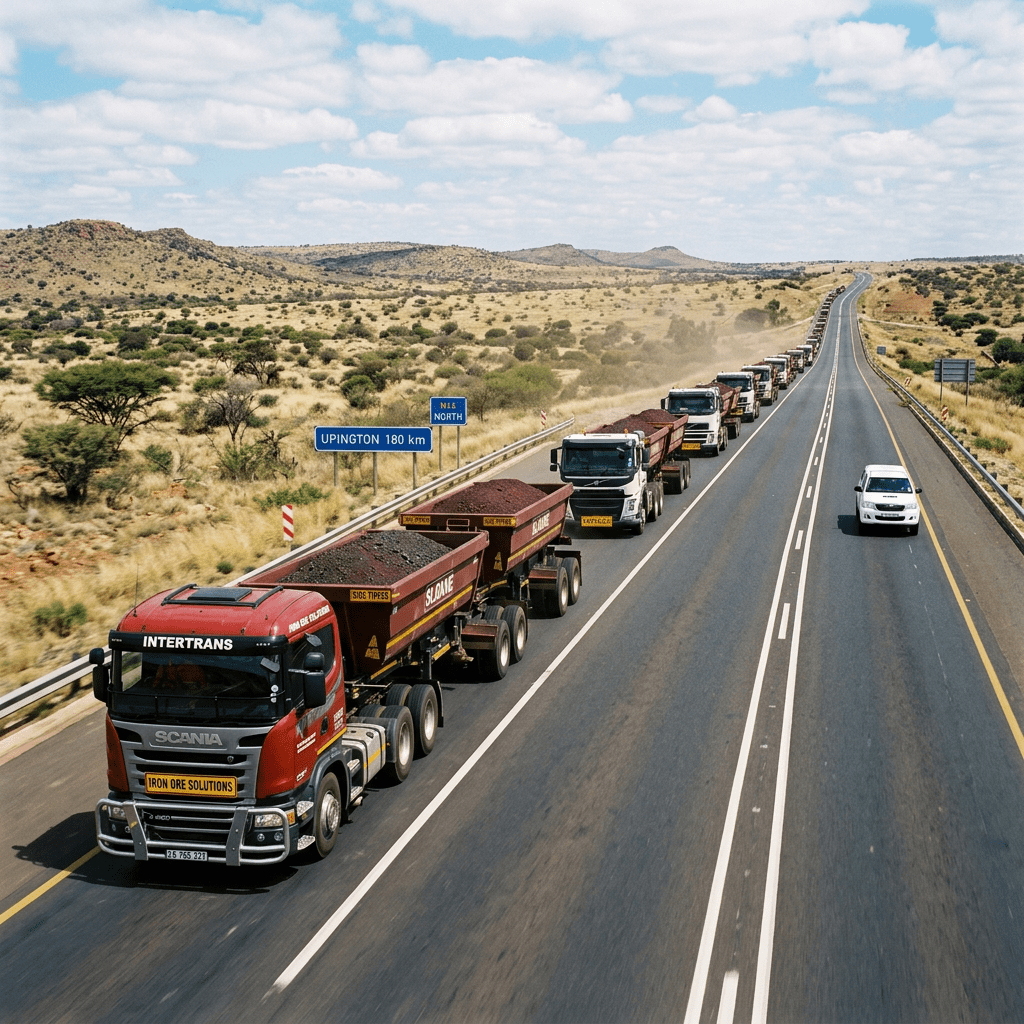
The movement of iron ore from Gauteng to major export terminals and industrial ports is a critical part of the mining and logistics sector in South Africa. Mining companies, exporters, and industrial suppliers rely on efficient transport networks to move bulk iron ore safely and cost-effectively across long distances.
With increasing demand for mineral exports and industrial raw materials, iron ore transport logistics have become essential for supporting supply chain efficiency, mining productivity, and international trade operations.
Why Iron Ore Transport Is Important
Iron ore remains one of the world’s most valuable industrial minerals, widely used in:
- Steel manufacturing
- Infrastructure development
- Industrial production
- Automotive manufacturing
- Construction sectors
South Africa is one of Africa’s largest mining economies, and efficient transport systems are necessary to move iron ore from inland mining and storage facilities to export ports.
Main Transport Routes from Gauteng to South African Ports
Iron ore transported from Gauteng typically moves toward major export and industrial ports including:
Port of Richards Bay
Port of Richards Bay is one of South Africa’s busiest bulk commodity export terminals.
The route is commonly used for:
- Bulk mineral exports
- Mining cargo
- Industrial freight
- Heavy commodity logistics
Port of Durban
Port of Durban supports containerized cargo, industrial freight, and mining-related logistics operations.
Port of Ngqura
Port of Ngqura is another important export hub supporting industrial and mineral freight movement.
Types of Vehicles Used for Iron Ore Transport
Iron ore logistics operations typically use heavy-duty transport equipment designed for bulk freight movement.
Side Tipper Trucks
Side tippers are commonly used because they:
- Handle large-volume bulk loads
- Support fast unloading
- Improve transport efficiency
Superlink Trailers
Superlinks are ideal for:
- Long-distance freight
- High-capacity bulk transport
- Mining logistics operations
Flatbed and Specialized Mining Trailers
Certain industrial operations may use specialized trailers depending on cargo specifications and route requirements.
Top Companies Offering Iron Ore Transport Services
1. Cargo Carriers
Cargo Carriers provides bulk freight and mining logistics services throughout South Africa and Southern Africa.
2. JCHX Logistics South Africa
JCHX supports mining transport and heavy industrial logistics operations for bulk commodity movement.
3. BHL Group
BHL Group offers mining transport, long-distance freight, and regional logistics support.
4. Mammoet
Mammoet specializes in heavy haulage, mining logistics, and oversized industrial transport solutions.
5. Siyanda Resources Logistics
Siyanda Resources Logistics supports bulk commodity transport and mining-related supply chain operations.
6. FLCC Solutions
FLCC Solutions provides logistics coordination, freight administration, dispatch support, and bulk transport solutions for businesses operating across South Africa.
Their services may include:
- Iron ore transport coordination
- Bulk freight management
- Side tipper logistics support
- Long-distance transport
- Fleet administration
- Dispatch management systems
Mining businesses often require scalable logistics partners capable of improving operational efficiency and reducing freight delays.
7. Khumani Logistics
Khumani Logistics supports mining freight movement and industrial bulk transport operations.
8. African Mining and Crushing
African Mining and Crushing supports mining operations and related material handling logistics services.
Benefits of Professional Iron Ore Transport Services
Efficient Bulk Freight Handling
Specialized mining transport companies understand:
- Bulk loading procedures
- Weight compliance
- Commodity handling
- Fleet coordination
Reduced Operational Downtime
Reliable logistics support helps mines maintain:
- Production flow
- Export schedules
- Supply chain continuity
Route Optimization
Professional transport providers use:
- GPS fleet tracking
- Route planning software
- Dispatch systems
- Fuel management technologies
Compliance and Safety
Mining transport operators maintain:
- Roadworthy fleets
- Cargo safety procedures
- Driver compliance
- Insurance coverage
Challenges in Iron Ore Transport
Fuel Costs
Long-distance bulk transport operations are heavily affected by diesel price fluctuations.
Road Infrastructure Pressure
Heavy mining freight places significant pressure on transport infrastructure.
Fleet Maintenance
Mining transport fleets require continuous maintenance due to:
- Heavy loads
- Long distances
- Harsh operational environments
Scheduling Delays
Port congestion and loading delays can impact delivery timelines and export operations.
How Logistics Technology Improves Mining Transport
Modern mining logistics increasingly relies on:
- GPS tracking systems
- Fleet management software
- Digital dispatch coordination
- Route optimization tools
- Fuel monitoring systems
These technologies help improve:
- Delivery efficiency
- Cargo visibility
- Fleet productivity
- Cost control
Industries That Depend on Iron Ore Transport
Steel Manufacturing
Steel producers require continuous iron ore supply for industrial production.
Export and Commodity Trading
Exporters depend on reliable transport to maintain international shipping schedules.
Mining Operations
Mining companies rely on bulk logistics to move materials between mines, storage facilities, and ports.
Industrial Manufacturing
Industrial plants use iron ore and related materials in production processes.
The Future of Mining Logistics in South Africa
South Africa’s mining logistics sector continues evolving through:
- Fleet digitization
- Smart dispatch systems
- Automated route planning
- Heavy transport optimization
- Supply chain integration
As export demand increases, efficient iron ore transport between Gauteng and South African ports will remain critical to the mining economy.
Conclusion
Iron ore transport from Gauteng to South African ports is essential for supporting mining operations, export logistics, and industrial supply chains. Businesses require experienced logistics providers capable of managing bulk freight safely, efficiently, and cost-effectively across long distances.


Leave a Reply