
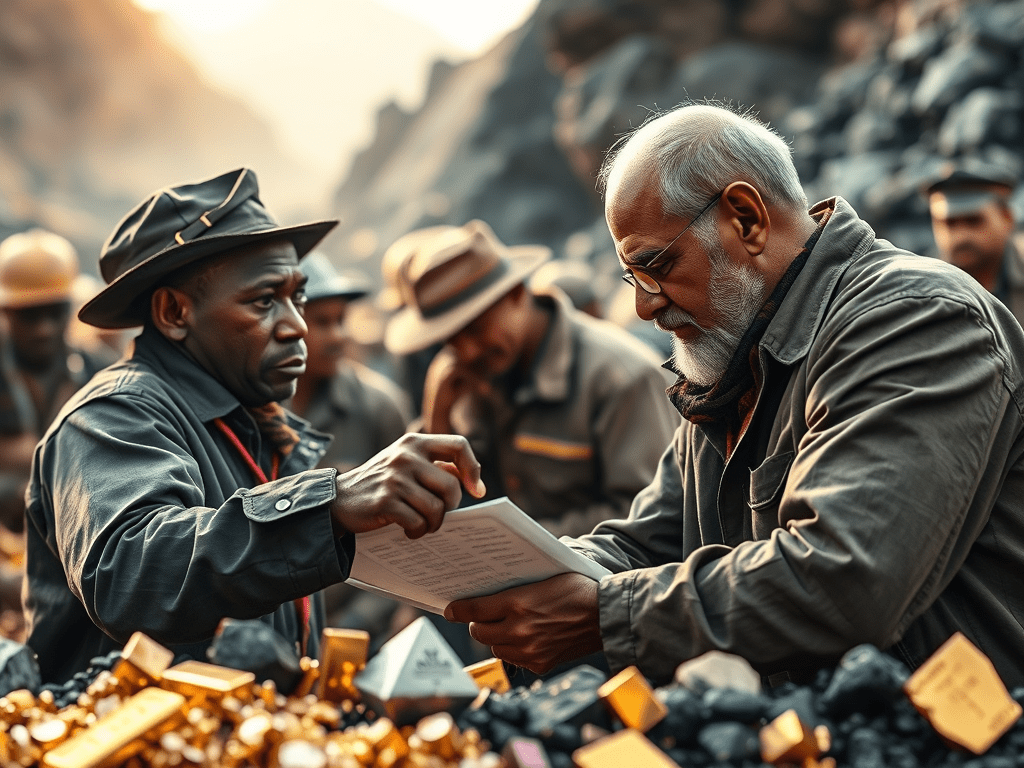
South Africa’s mining sector is one of the most powerful engines of the economy. With rich deposits of gold, platinum, coal, manganese, chrome, and more, mining contributes significantly to GDP, exports, and employment. But behind every successful mining deal or mineral shipment, there is often a middleman—a broker, agent, or intermediary who facilitates the transaction between the producer and the buyer.
In South Africa, the role of middlemen in mining is complex and controversial. Are they essential connectors in a fragmented value chain, or do they profit at the expense of transparency and fairness? Let’s explore their role, impact, and how they shape the industry.
What Do Middlemen Do in the Mining Sector?
Middlemen act as connectors between:
- Small-scale miners and large buyers/exporters
- Mining companies and government procurement processes
- Local mineral producers and international traders
They often:
- Negotiate contracts
- Facilitate compliance with trade/export regulations
- Handle logistics and transport
- Match supply with demand quickly
- Secure funding or off-take agreements
In a sector where many miners (especially artisanal or junior miners) lack market access or export knowledge, middlemen fill a vital gap.
Common Types of Middlemen in South African Mining
- Brokers/Agents – Connect miners with buyers (local or international), often earning commissions.
- Export Traders – Purchase minerals in bulk and sell internationally.
- Logistics Coordinators – Facilitate cross-border movement of minerals, especially to ports.
- Local Fixers – Navigate community engagement, political dynamics, or licensing.
- Deal Originators – Introduce mining projects to investors or off-takers.
Why Are Middlemen So Prevalent in South Africa?
Several factors explain the rise of middlemen:
- Regulatory Complexity: The mining value chain is governed by permits, licensing, and compliance protocols. Middlemen who understand the system can navigate it more efficiently than small players.
- Market Access Gaps: Many small or community-owned mines don’t have direct relationships with large buyers, smelters, or export channels.
- Risk Management: Buyers may prefer working with middlemen to reduce the risk of non-compliance, delays, or poor-quality products.
- Informal Sector Growth: In the informal or semi-formal mining space, trusted intermediaries play a huge role in informal mineral trade.
The Dark Side: Risks and Criticisms
While middlemen can facilitate transactions, they are often accused of exploiting gaps for profit. Some of the main concerns include:
- Lack of Transparency: Pricing can be opaque. Miners may get a small fraction of the final sale price.
- Price Manipulation: Some middlemen exploit miners’ lack of market knowledge.
- Corruption and Bribes: Intermediaries in licensing or public procurement can act unethically.
- Regulatory Evasion: Informal traders may bypass safety, tax, or environmental rules.
Case Example: Chrome and Manganese Trade
In provinces like Limpopo and North West, chrome and manganese mining is booming. Many community-owned or black-owned miners rely on middlemen to access export markets. While some partnerships are fair, others leave miners underpaid, with middlemen pocketing margins as high as 40–60% of the sale price.
How to Improve the Role of Middlemen
To ensure middlemen contribute positively to the mining ecosystem, South Africa needs:
- Better Regulation – Introduce accountability and registration for mineral brokers and intermediaries.
- Market Access for Miners – Government-supported platforms where small miners can directly connect with buyers.
- Transparency Tools – Use digital contracts, price tracking apps, and public tenders.
- Capacity Building – Train miners in negotiation, pricing, and compliance.
Bridging the Gap or Blocking Progress?
The middleman role is not inherently negative. In many cases, they provide valuable support, especially in a fragmented industry. However, unchecked and unregulated middlemen can distort the market, lower income for miners, and weaken transformation goals.
As South Africa aims to make mining more inclusive and equitable, reforming the role of intermediaries must be part of the conversation.
Conclusion
Middlemen will always have a place in South Africa’s mining industry—but that role must be transparent, fair, and properly regulated. By shifting the balance of power and knowledge back to miners, South Africa can ensure that the wealth of its soil benefits more than just a few in the middle.
 FLCC SOLUTIONS
Leave a comment