
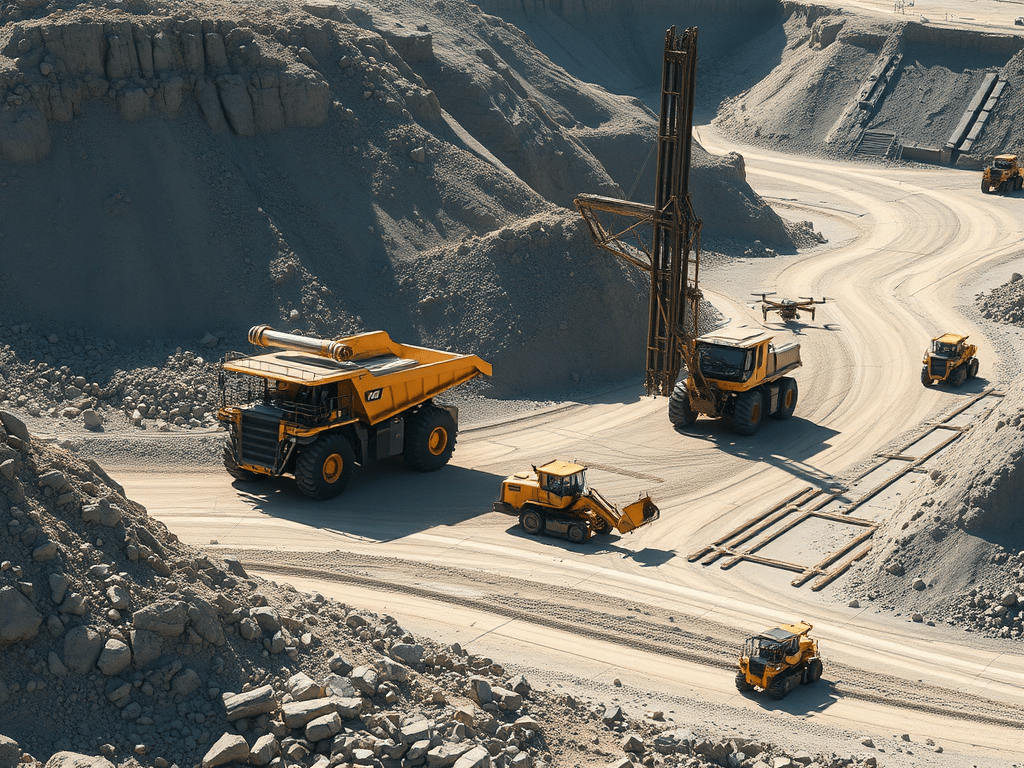
As global demand for minerals and metals continues to grow, the mining industry is turning to automation to increase efficiency, reduce costs, and improve safety. From autonomous trucks to robotic drilling systems, mining operations are evolving rapidly through digital technologies. But this transformation is not without consequences, especially for the labor force that has long powered the sector.
While automation brings innovation and productivity, it also raises questions about job displacement, re-skilling, and the future of employment in mining. In this blog, we explore how automation is reshaping labor in the mining industry—both its risks and opportunities—and what it means for workers, companies, and communities.
What Does Automation in Mining Look Like?
Automation in mining involves the use of machines, software, and artificial intelligence to perform tasks with minimal or no human intervention. Common examples include:
- Autonomous haul trucks that navigate open-pit mines without drivers
- Remote-controlled drilling rigs operated from safe control rooms
- Sensor-equipped conveyor systems that detect blockages or wear
- AI-driven predictive maintenance to reduce machinery failure
- Drones and 3D mapping for surveying and site monitoring
Companies such as Rio Tinto, Anglo American, and BHP are already operating “smart mines” with high levels of automation in regions like Australia, Chile, and South Africa.
The Benefits of Automation for Mining Operations
a) Improved Safety
One of the strongest arguments for automation is safety. Machines can operate in hazardous zones such as deep shafts, unstable rock formations, or areas with toxic gases, reducing the risk to human life.
b) Greater Efficiency and Cost Savings
Automation allows for continuous 24/7 operations without fatigue or shift changes, improving productivity and reducing operational costs over time.
c) Data-Driven Decision Making
Automated systems provide real-time data on equipment performance, geological conditions, and safety risks, enabling faster and better-informed decisions.
The Human Cost: Job Loss and Displacement
Despite its advantages, automation is triggering significant concern about job losses, particularly among low-skilled workers. As routine manual tasks are taken over by machines, some traditional roles, such as drill operators, truck drivers, and surveyors, are becoming obsolete.
In South Africa, where mining remains a major employer and economic contributor, automation could deepen unemployment and inequality if not managed responsibly.
According to studies, tens of thousands of mining jobs globally are at risk of automation within the next decade, especially in large-scale, mechanised operations.
The Shift Toward New Skills and Roles
Rather than eliminating jobs altogether, automation is reshaping the nature of work in mining. There’s growing demand for roles such as:
- Remote equipment operators
- Data analysts and software engineers
- Automation technicians
- Cybersecurity and systems specialists
These jobs require digital literacy, problem-solving, and technical skills, a stark shift from traditional, physically intensive mining roles.
The industry must prioritise re-skilling and up-skilling to help current workers transition into these emerging roles. Without inclusive training programs, many may be left behind.
Managing the Transition: What Can Be Done?
For automation to be inclusive and sustainable, mining companies, governments, and communities must work together. Key strategies include:
- Investing in training and vocational education programs tailored to mining technologies
- Creating hybrid roles that blend manual and digital responsibilities
- Implementing just transition frameworks to support displaced workers
- Promoting local employment in technology, maintenance, and environmental management
- Engaging with unions and communities early in the automation rollout process
The Bigger Picture: Balancing Technology and Human Impact
Automation is not inherently good or bad, it’s a tool. Its impact depends on how it is implemented and who it benefits. While machines may be more efficient, people bring judgment, creativity, and adaptability that remain irreplaceable.
A truly modern mining industry must find the balance between digital transformation and social responsibility, ensuring that progress doesn’t come at the cost of livelihoods and community stability.
Conclusion
The automation revolution is well underway in the mining sector, offering a pathway to safer, smarter, and more efficient operations. But it also presents significant challenges for labor, particularly in regions heavily dependent on mining employment. By embracing a human-centred approach, investing in skills, and creating opportunities for inclusive growth, the mining industry can navigate this shift responsibly, and ensure that the future of mining works for everyone.
 FLCC SOLUTIONS
Leave a comment